
It happens to the best of us: you’re standing in your kitchen late at night when something small and brown darts across the floor. Your heart skips a beat. You hope it’s just this one that’s found its way into your home and pray you don’t see another!
The truth is that seeing even one mouse is often a sign that others are nearby. Mice are social, fast-breeding, and stealthy creatures that prefer to stay hidden. If you spot one, there’s a good chance there are multiple mice somewhere behind your walls, under your appliances, or in your attic.

How Do I Know It’s NOT Just One Mouse?
Look for these telltale signs that show you may be dealing with a mouse infestation:
- Droppings (small, dark, about the same size as a grain of rice) along baseboards, under sinks, or inside drawers.
- Gnaw marks on food packaging, wires, or wooden structures. Mouse gnaw marks are linear and just a few millimeters in size.
- Unfamiliar scratching sounds in walls or ceilings at night.
- Grease marks or smudges along walls and floorboards. Mice following the same path over and over may leave these greasy rub marks.
- A musky odor can signal possible nesting areas in a home.
- Nesting materials like paper products, packing supplies, insulation, or fabric.
If any of these pieces of pest evidence are present, it’s unlikely you’re dealing with just one mouse.
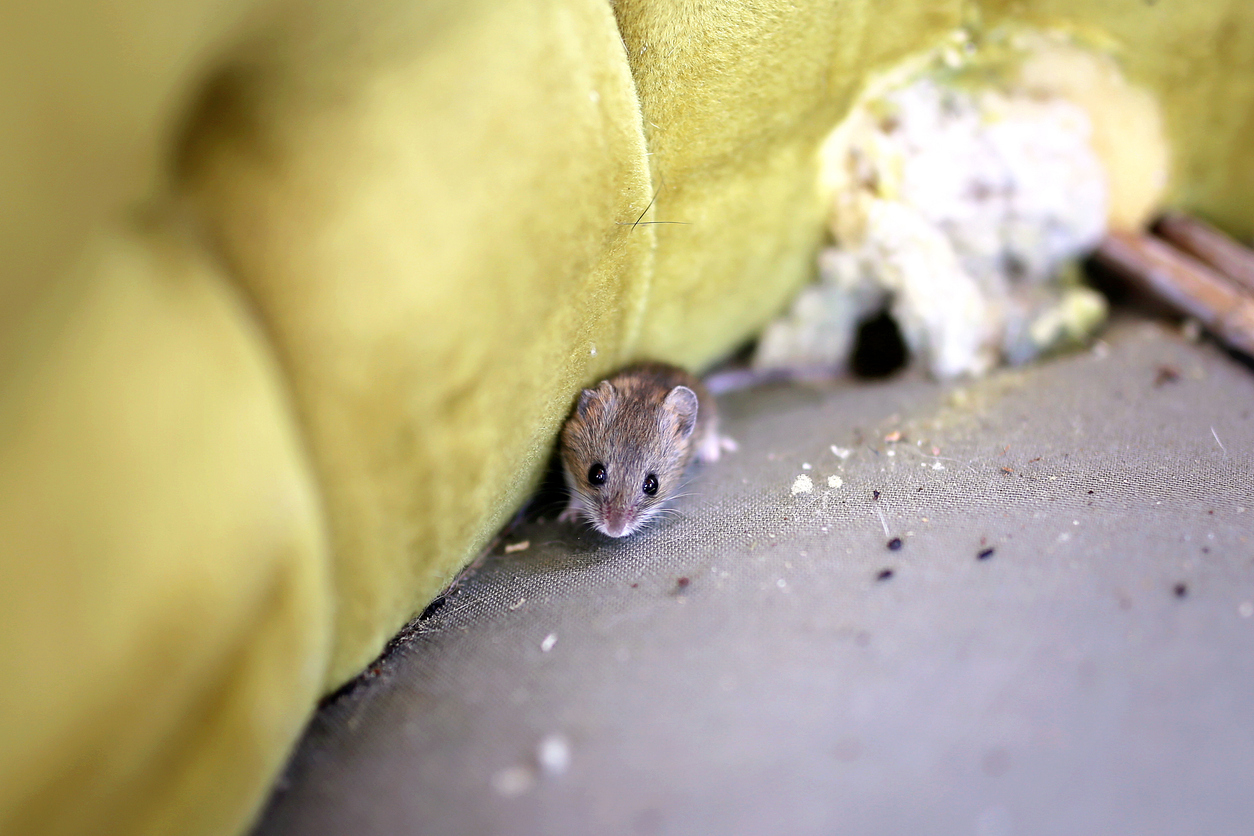
Why One Mouse Is STILL a Big Deal
Even a single mouse can contaminate surfaces and spread pathogens. Mouse waste can contain harmful bacteria like E. coli and Salmonella, which can cause food poisoning symptoms. Just one mouse can deposit 3,000 microdroplets of urine over the course of a day – that’s 100 times smaller than a raindrop. Mice can cover lots of area by depositing their waste this way, spreading pathogens easily in the process. Mice can also act as a vector for diseases like Leptospirosis and Hantavirus Pulmonary Syndrome (HPS), negatively affecting the health of our communities.

In a restaurant, a mouse can slip through a floor drain or gaps on a delivery door and contaminate food prep surfaces in minutes. In a home kitchen, a mouse can chew through cereal boxes or bags of pet food, leaving droppings and urine behind; turning your pantry or kitchen into a contamination zone.
Once inside, mice can multiply very fast. A single female house mouse can produce 5 to 10 litters per year – that’s a lot of baby mice! Because of this, a “one mouse” problem can quickly turn into a full-blown infestation.
Learn more about protecting your property on our Rodent Control Services page.
Real-Life Scenarios: Home vs. Restaurant
Below are two examples of real-life scenarios concerning mice and mouse evidence in your home or business. Despite whether mice are found in a residential or commercial setting, these pests can have major negative effects and need to be taken seriously.
In a Home Kitchen
You find containers that have been chewed open, hear scratching behind the stove, and spot droppings near the dog’s food bowl. Even if you only see one mouse, there’s likely more nearby and it’s time to take action.
In a Restaurant Kitchen
A nighttime security camera captures one mouse scurrying across the floor. By the next morning, inspectors could find droppings in dry storage and chewed packaging. Health code violations and food contamination risks can follow fast.
Professional rodent prevention services for commercial kitchens are available on our Restaurant Pest Control page.
Mouse FAQ
How did a mouse get into my house?
Mice can squeeze through holes the size of a dime coin. Gaps under doors, utility line openings, and dryer vents are all common entry points for hungry mice looking for warm places to nest this time of year.
What are the signs that I have a mouse infestation?
Droppings, gnaw marks, nesting materials, scratching sounds, and foul odors can be major indicators. Refer to the list under the section: “How Do I Know It’s NOT Just One Mouse?” for more details.
Are mice dangerous?
Yes, they can be. Mice can spread disease, contaminate food, and their hair/waste can trigger allergies. They can also pose fire risks by chewing on electrical wires.
How can I keep mice from getting in?
Make modifications to your home or business to make it unattractive to mouse pests. Seal up entry points around the exterior of a structure, store food in airtight containers, keep trash covered, and follow sanitation measures to prevent mice from being attracted to your structure in the first place.
Learn more about identifying and preventing these pests on our House Mouse Pest Library page.

The Bottom Line
Whether you spot a critter at home or at work, don’t assume it’s just one mouse. A quick and educated response is key to keeping your space safe, sanitary, and pest-free.
Schedule a free inspection with Rose Pest Solutions today to make sure one mouse doesn’t turn into a full-blown infestation.