
A spider guide, courtesy of Allison Beach, BCE-Intern.
One day your porch is perfectly clear. The next morning, you’re walking face first into a giant spider web on your way to grab the mail.
If that sounds familiar, you’re not alone! Summer is one of the most active times of year for spiders throughout the Midwest. As temperatures rise, so do insect populations, and spiders get to work building webs where they’ll have the best chance of catching their next meal to survive.
The good news? Those webs usually aren’t a sign that your home has a spider infestation. More often, they indicate that your property has become the perfect hunting grounds for these arachnids.
Listen to The Bug Girl on WGN Radio
Hear Janelle explain why spider webs seem to appear overnight, common spider myths, and what homeowners should know this season.
Why Spider Webs Seem to Appear Overnight
Many of the spiders responsible for those impressive webs are active at night. While you’re asleep, they can spin an intricate silk web in just a few hours. By morning, it looks like it appeared out of nowhere.
You’ll often find these webs stretched between porch railings, shrubs, fences, mailboxes, patio furniture, or even across a walkway. While it may feel like spiders are targeting you personally, they’re actually targeting the insects flying through those spaces.
Open areas near a garden, spaces between plant foliage, and structural parts of your porch near exterior lighting can act like highways for flying insects. Spiders are surprisingly strategic. They place their webs in areas like those mentioned above where they’re most likely to catch a meal. That’s why there always seems to be a web near your front door, garden walkway, or patio light.
Many web-building spiders rebuild nearly every day. Wind, rain, and struggling insects can damage the silk, making it less effective at catching their next meal. Some spiders even recycle portions of their old web by eating the silk before spinning a fresh one, allowing them to recover valuable proteins needed to produce a stronger, stickier web. Spiders are little environmentalists!
Who’s Building These Webs?
Not every spider builds a web like the ones you might see (or run into). Not every spider builds the same type of web, either. Below are a few of the most common spiders you may spot in or around your home during the summer months:
Orb Weaver
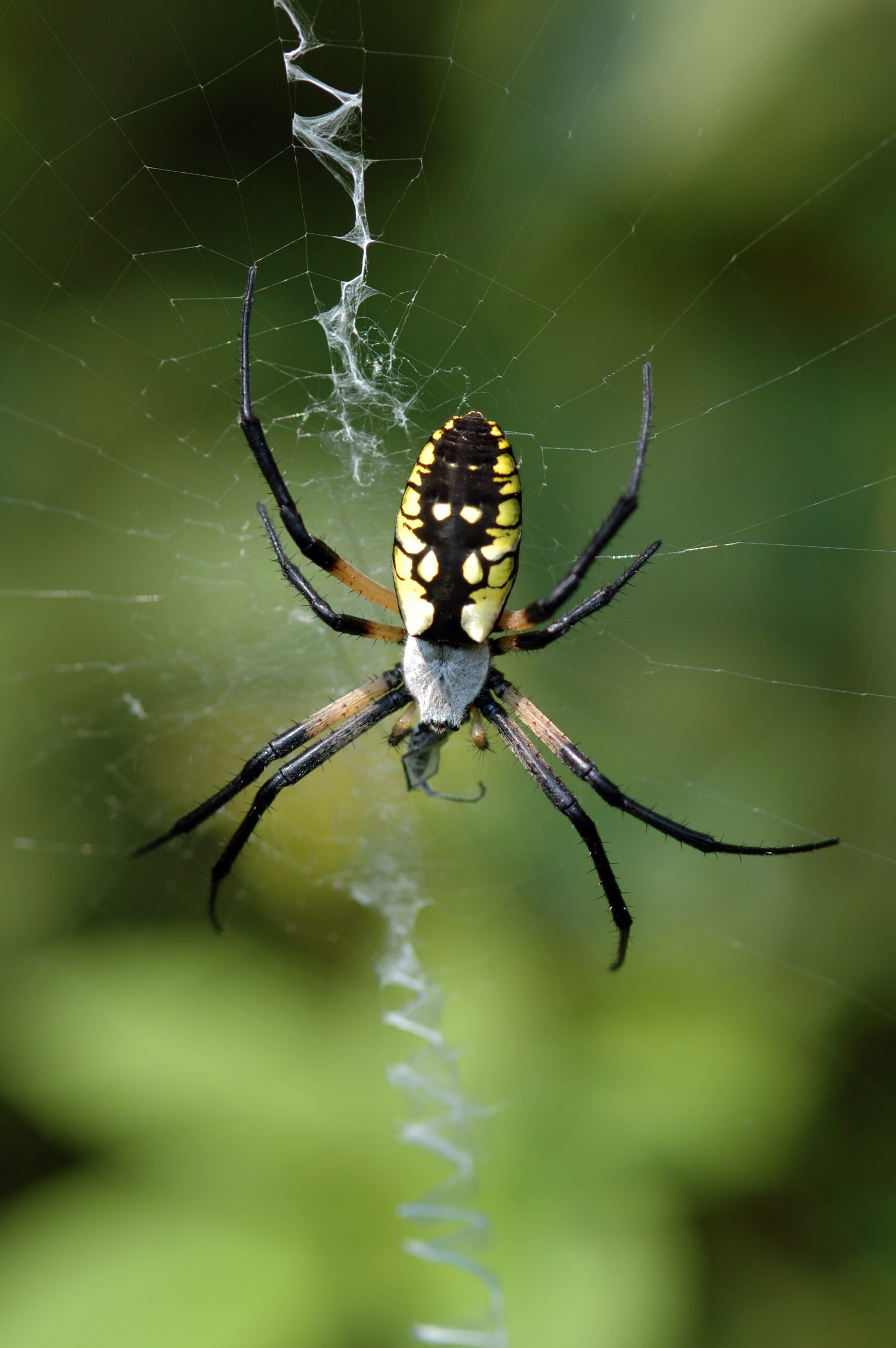
The master architect of the spider world, orb weavers create large, circular webs outdoors that seem to appear overnight between shrubs, porch railings, decks, and trees. While their size and bright color can be startling, they’re harmless to people and excellent at catching mosquitoes, moths, flies, and other flying insects. This type of spider likes to hang out upside down on their web.
House Spider
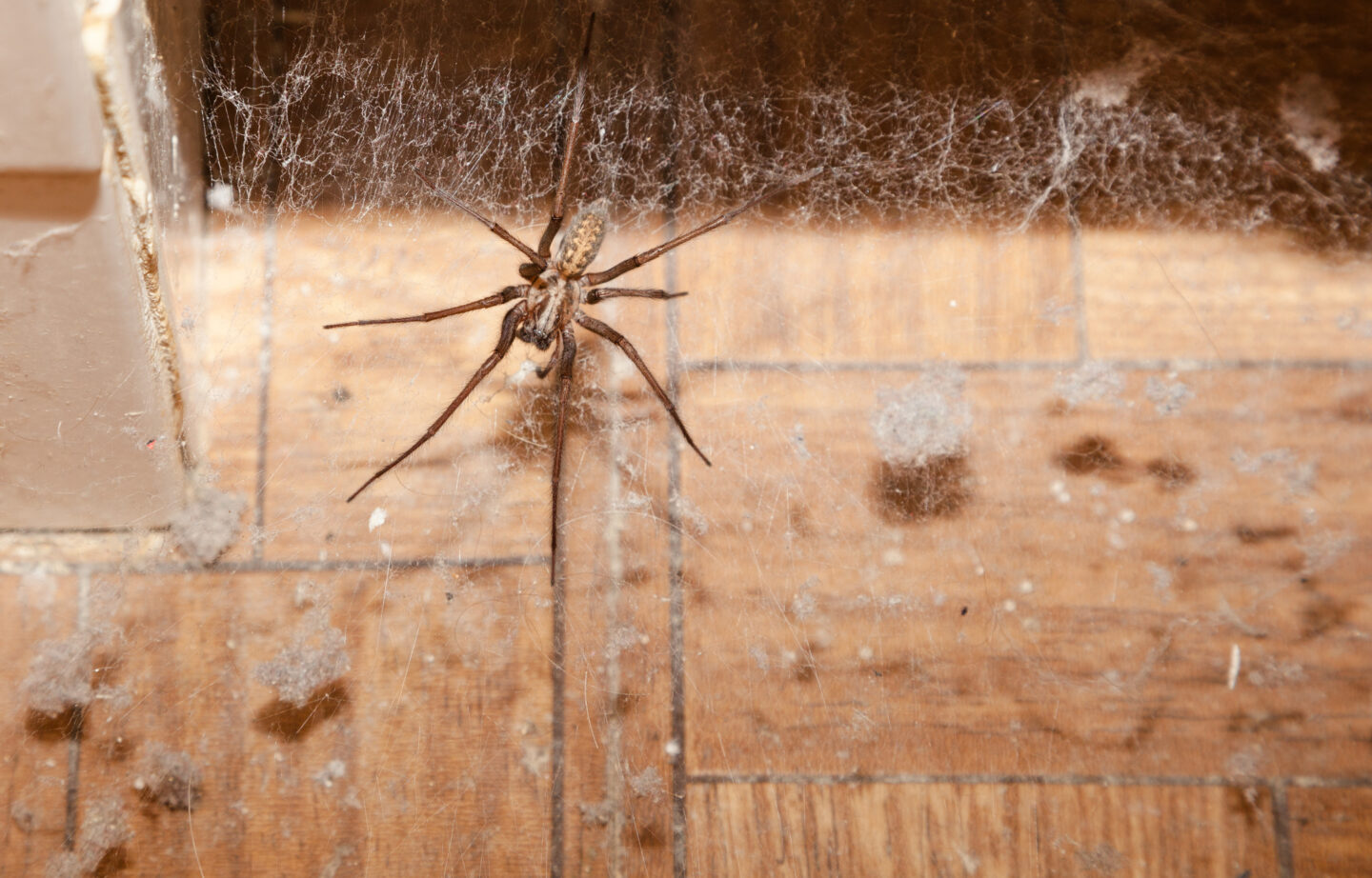
These year-round residents of structures prefer quiet corners of garages, sheds, barns basements, and window frames. Their messy-looking cobwebs may not win any beauty contests, but they can help reduce indoor insect activity. They VERY rarely will bite when threatened.
Cellar Spider
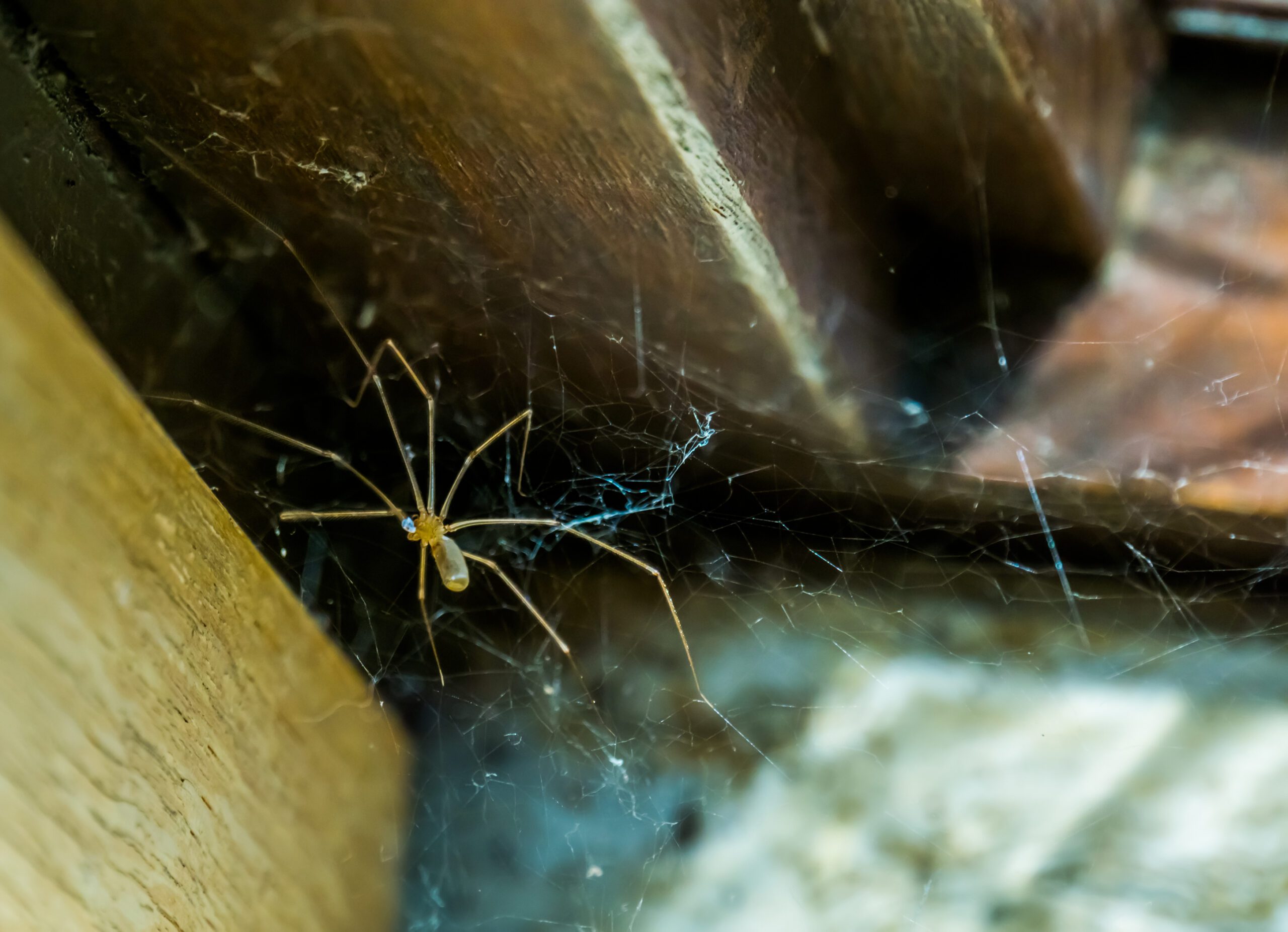
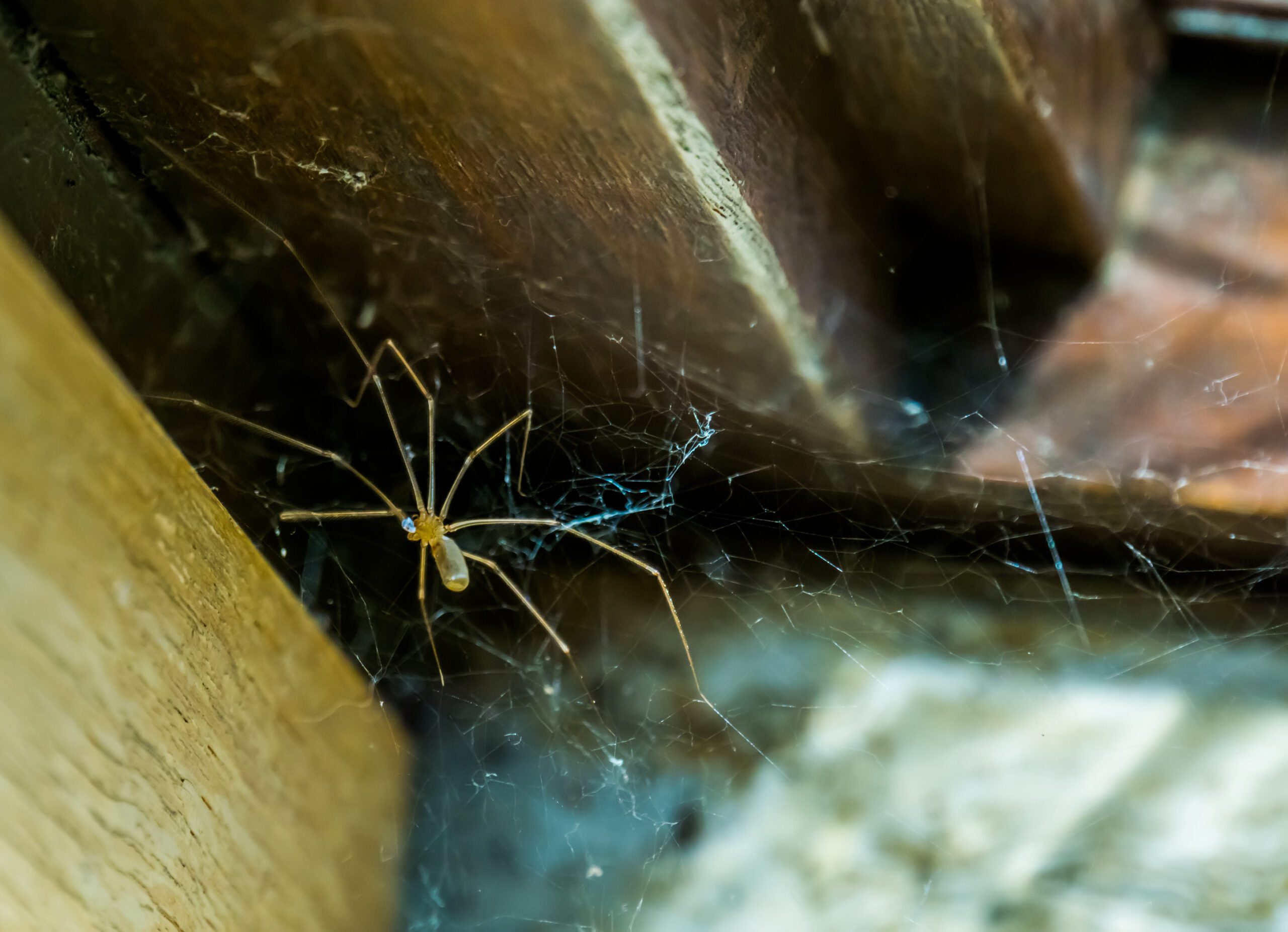
Cellar spiders are recognized by their long, thin legs and delicate webs. They are sometimes called “daddy-long-legs”, sharing a common name with another arachnid, harvestmen. They’re commonly found in basements and crawl spaces and are considered beneficial predators. They like to create messy cobwebs in the corners of rooms around baseboards. These spiders’ mouthparts are so small, they cannot pierce human or animal skin.
Wolf Spider
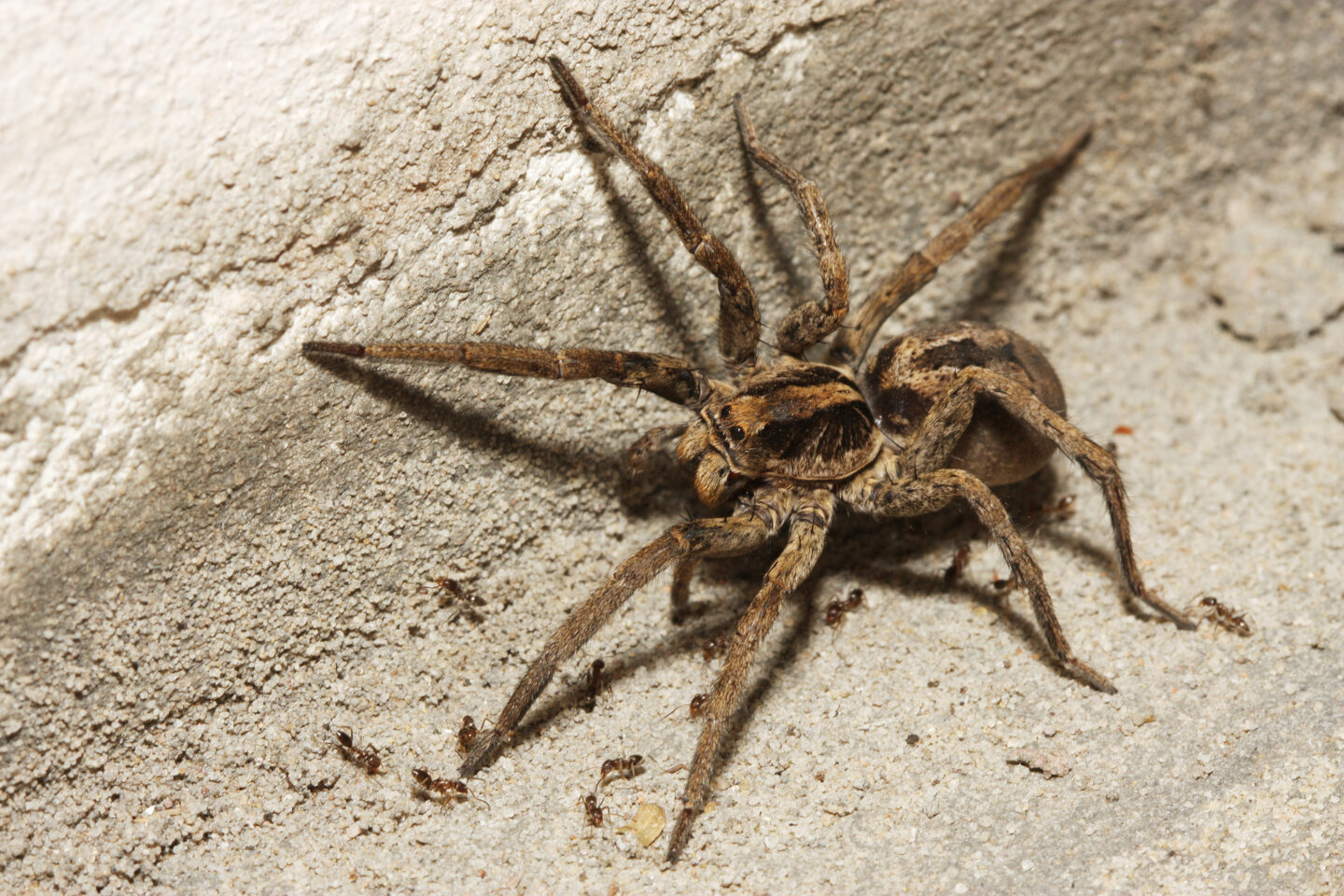
Don’t expect a web from this hunter. Wolf spiders actively chase their prey across the ground, on foliage or around structures instead of passively waiting for insects to become trapped. They may wander into garages or homes occasionally, but they’re more interested in hunting insects than interacting with people.
Jumping Spider
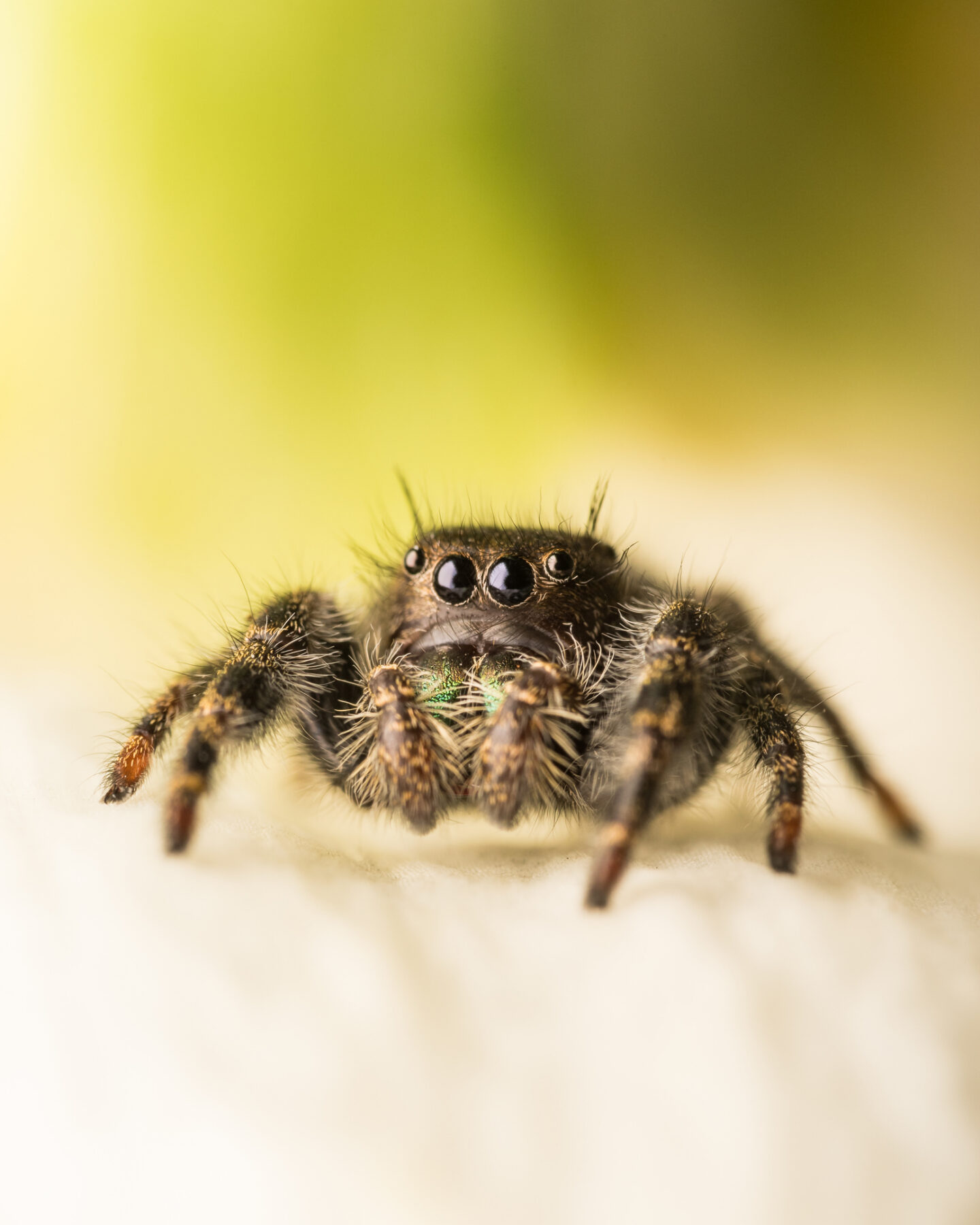
Small, curious, and surprisingly charismatic, jumping spiders hunt actively instead of using webs to catch their prey. They’re commonly seen on siding, fences, decks, and around windows during the day. These small spiders are very agile and seem to move around very erratically.
Although some spiders can look intimidating, the vast majority found around homes in the Midwest are harmless, reclusive, and prefer to avoid people. Spider bites are uncommon and usually happen only if a spider becomes trapped against the skin or is disturbed.
What Spider Webs Are Really Telling You
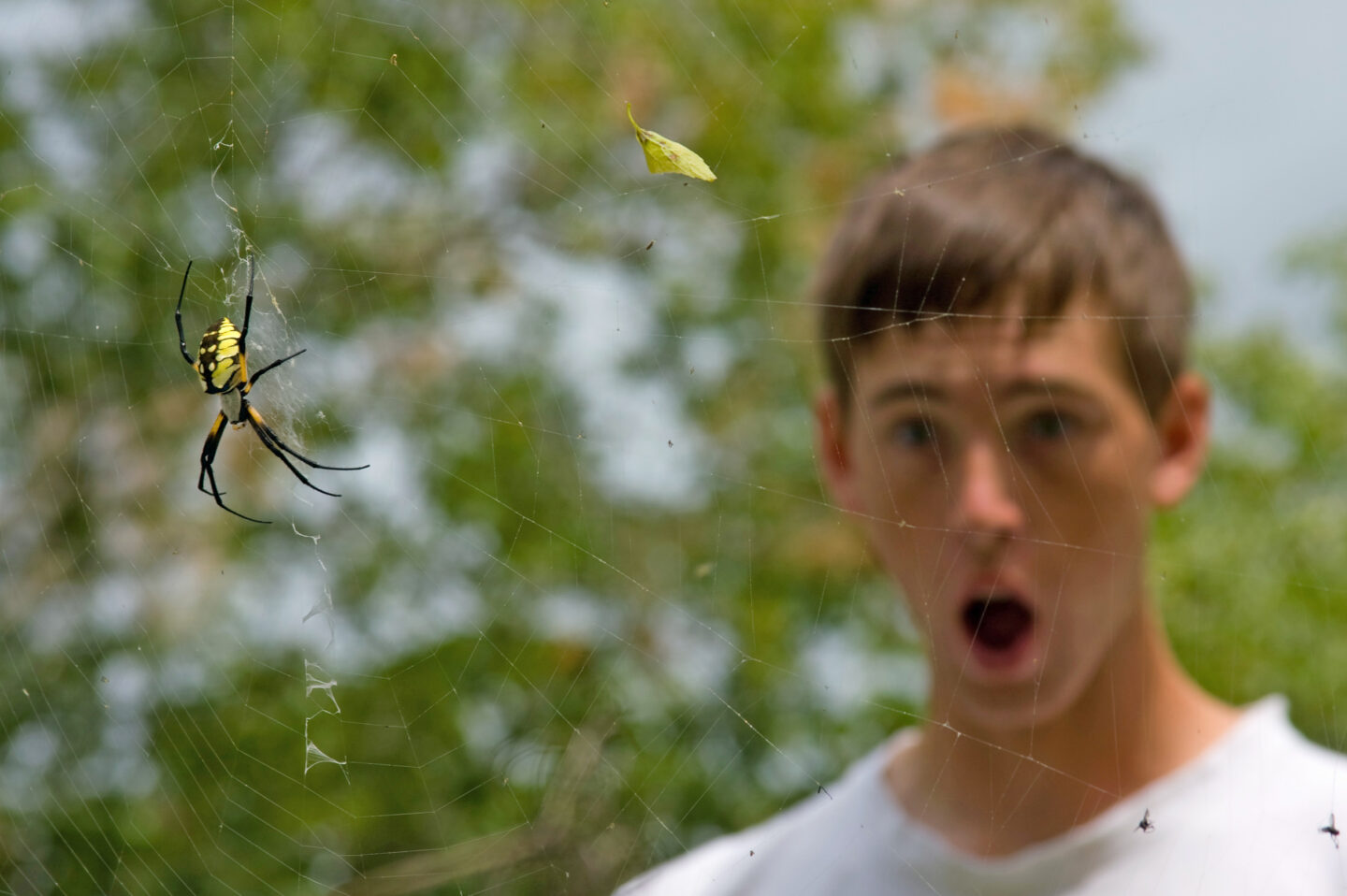
If you’re constantly brushing away webs or seeing an excessive amount of spiders, it’s worth asking another question:
Why are spiders choosing your property in the first place?
The answer is usually food (aka insects).
Most spiders are predators, not scavengers or plant eaters. They stay where insects are plentiful. If insects gather around your patio lights every evening or buzz around your landscaping during the day, spiders see a 24/7, all-you-can-eat bug buffet and are more than ready to move in!
Contrary to popular belief, finding a few spiders around your home doesn’t mean your house is dirty. Even clean, well-maintained homes can attract spiders if there’s a food source nearby. Arachnids and insects, just like humans and other animals, need food, water, and shelter to survive. Regardless of cleanliness or class, many structures provide these aspects of pest survival without us realizing it. If you spot a single spider indoors, no need to worry! Seeing one spider doesn’t necessarily mean you have a pest infestation. Many spiders are solitary hunters that spend their lives alone.
Because of spiders’ predatory feeding behaviors, simply removing webs or treating them often provides only temporary relief. Unless the insects attracting them are reduced, new spiders are likely to move in and take their place.
This is one reason professional pest management triumphs over DIY. A professional focuses on the bigger picture by reducing the conditions that attract nuisance insects to your structure, making your property less appealing to the spiders that feed on them.
How to Reduce Spider Webs Around Your Home
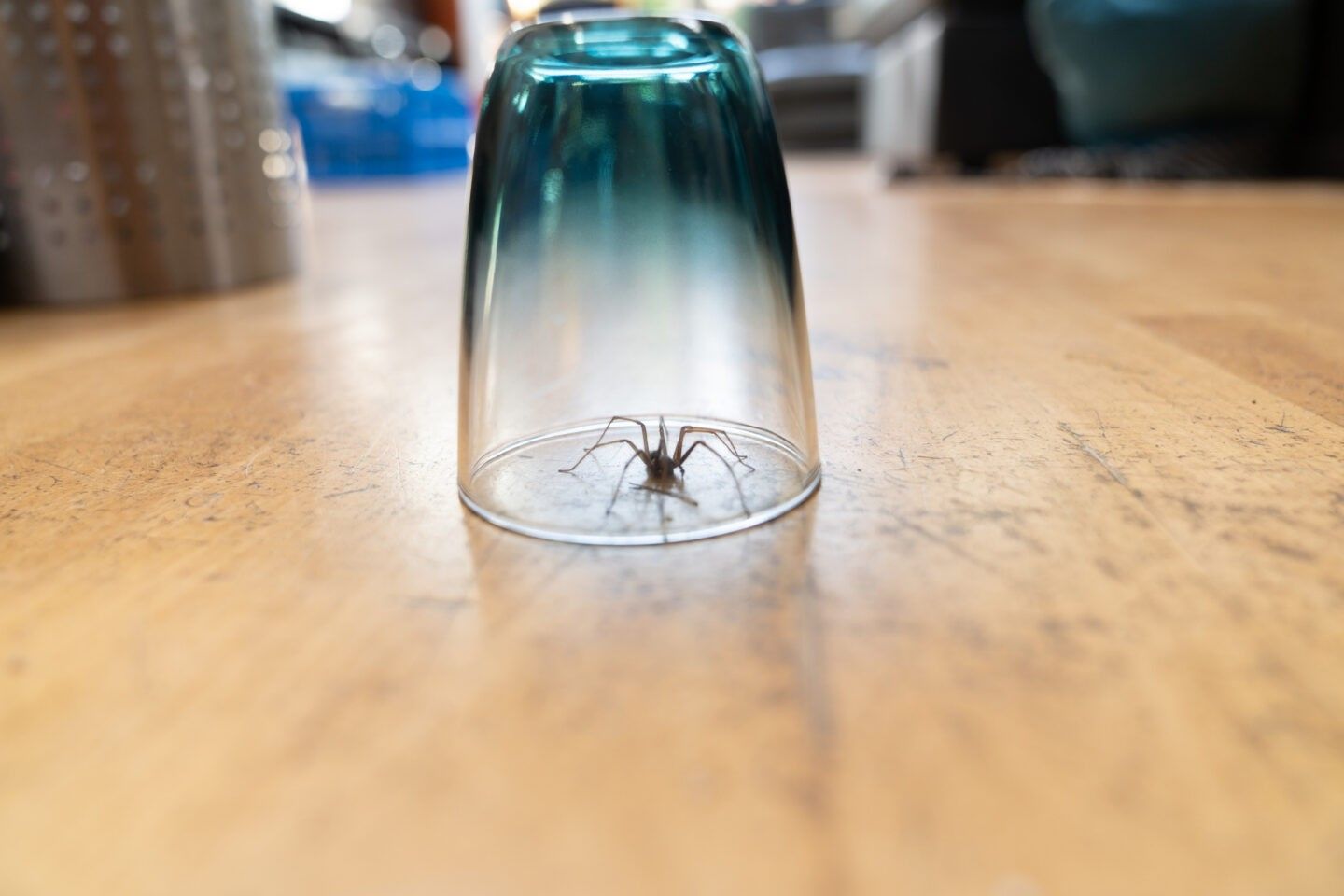
A few simple changes can make your home less inviting to pest spiders looking for insect meals.
- Remove webs from porches, doorways, patios, and outdoor furniture regularly.
- Trim shrubs, vines, and tree branches. Make sure there is minimal foliage touching the exterior of your structure.
- Switch bright white outdoor lights to warm-colored LED bulbs that attract fewer flying insects.
- Seal gaps around doors, windows, and utility openings to help keep insects and spiders outside your structure.
- Maintain proper sanitation and moisture control throughout your home. Less food/moisture sources for insects means that spiders are less likely to be present in your structure.
- Minimize excess clutter. Many spiders present in homes are reclusive, meaning that they prefer to hide in dark, concealed places and will not seek out humans.
While most homeowners don’t want to see creepy crawly spiders in their home and webs stretched across the patio, spiders are beneficial predators that help control mosquitoes, flies, moths, and other nuisance pests. If you are constantly seeing an excess of spiders in a home or if webs seem to return almost as quickly as you remove them, it can be a sign that another pest issue may need attention.
As we progress into late summer and early fall, spiders naturally become larger and more noticeable as they reach adulthood. If spider activity indoors becomes excessive or you’re concerned about the insects possibly attracting them, the experts at Rose Pest Solutions can identify the source of the problem and recommend a customized solution to help you enjoy your home with fewer pests all season long. Request a free quote anytime from your local Rose experts.