
Carpenter Ant Control in Chicagoland, the Greater Rockford Region and Southern Wisconsin
Getting Rid of Carpenter Ants
The most effective way to control carpenter ants is to identify and eliminate the entire colony. While homeowners often notice ants indoors, the main nest is typically located outside in damp or decaying wood. Carpenter ants may also establish multiple satellite colonies throughout a property, making complete elimination challenging without professional help. Routine inspections and ongoing pest management help identify new activity early and reduce the chance of recurring infestations.
A few simple maintenance practices can also help discourage carpenter ants from nesting around your home. Keep stacks of firewood elevated and away from the house, remove rotting logs, tree stumps, and wood debris, and trim branches that touch your roof or siding. Address moisture issues by repairing leaking pipes, gutters, or roofing, and avoid allowing mulch or landscaping to remain constantly damp. Eliminating moisture-damaged wood removes one of the carpenter ant’s favorite nesting sites.
For year-round peace of mind, our Healthy Home Maintenance Program provides protection against carpenter ants along with pavement ants, spiders, wasps, and many other common household pests.

How to Identify a Carpenter Ant
Appearance
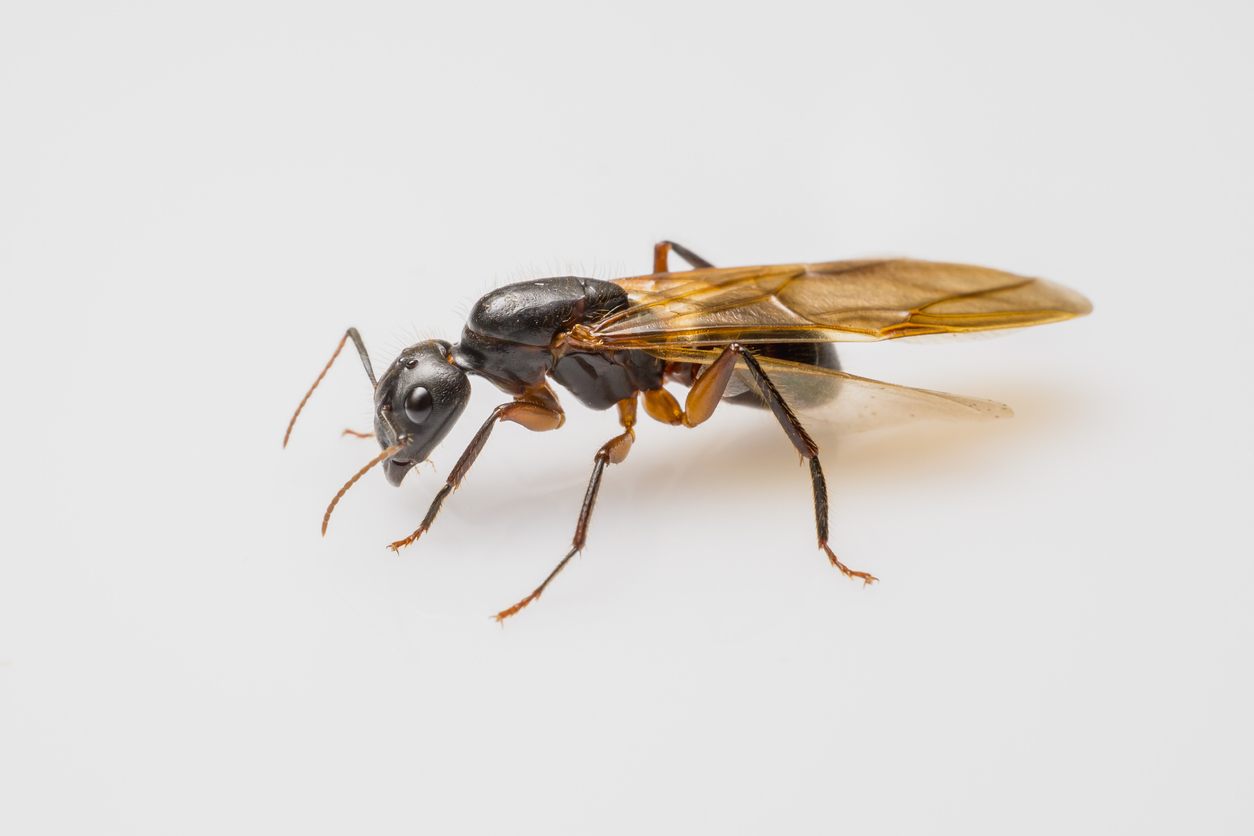
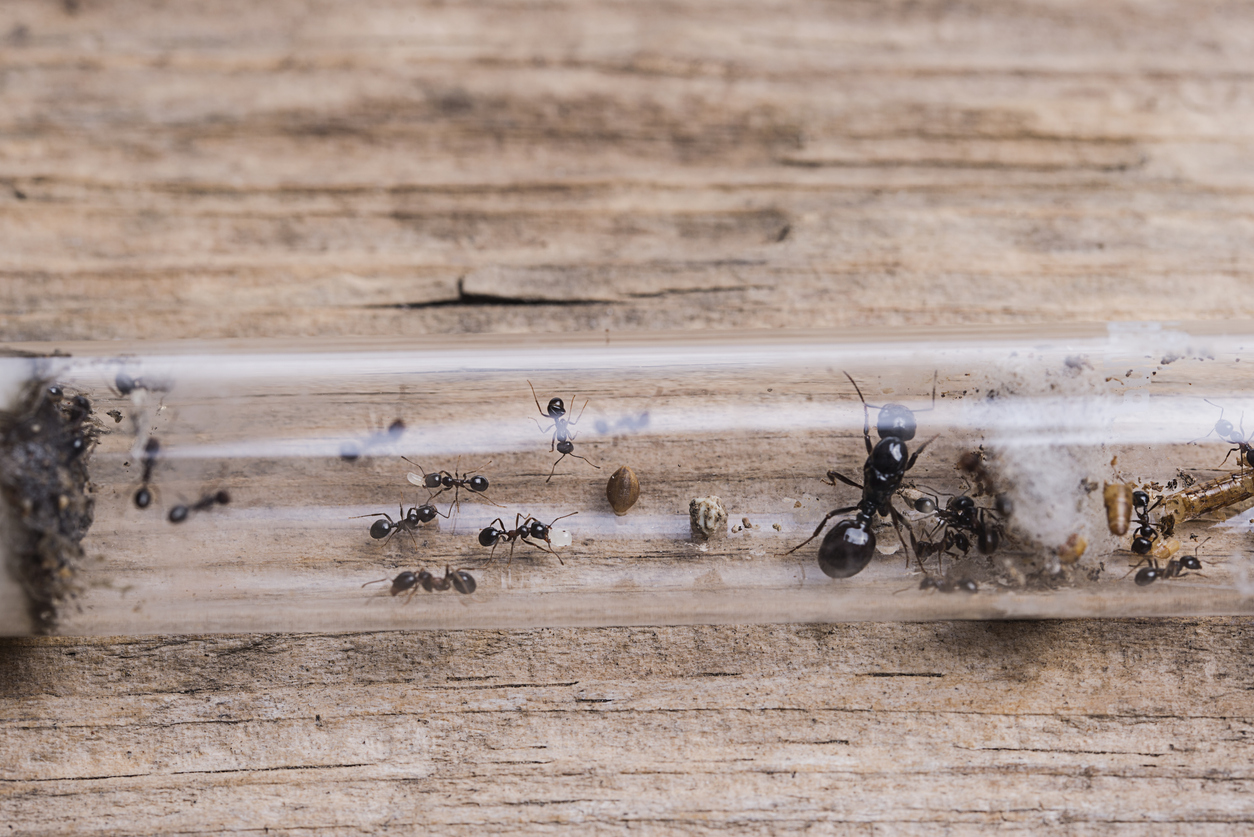
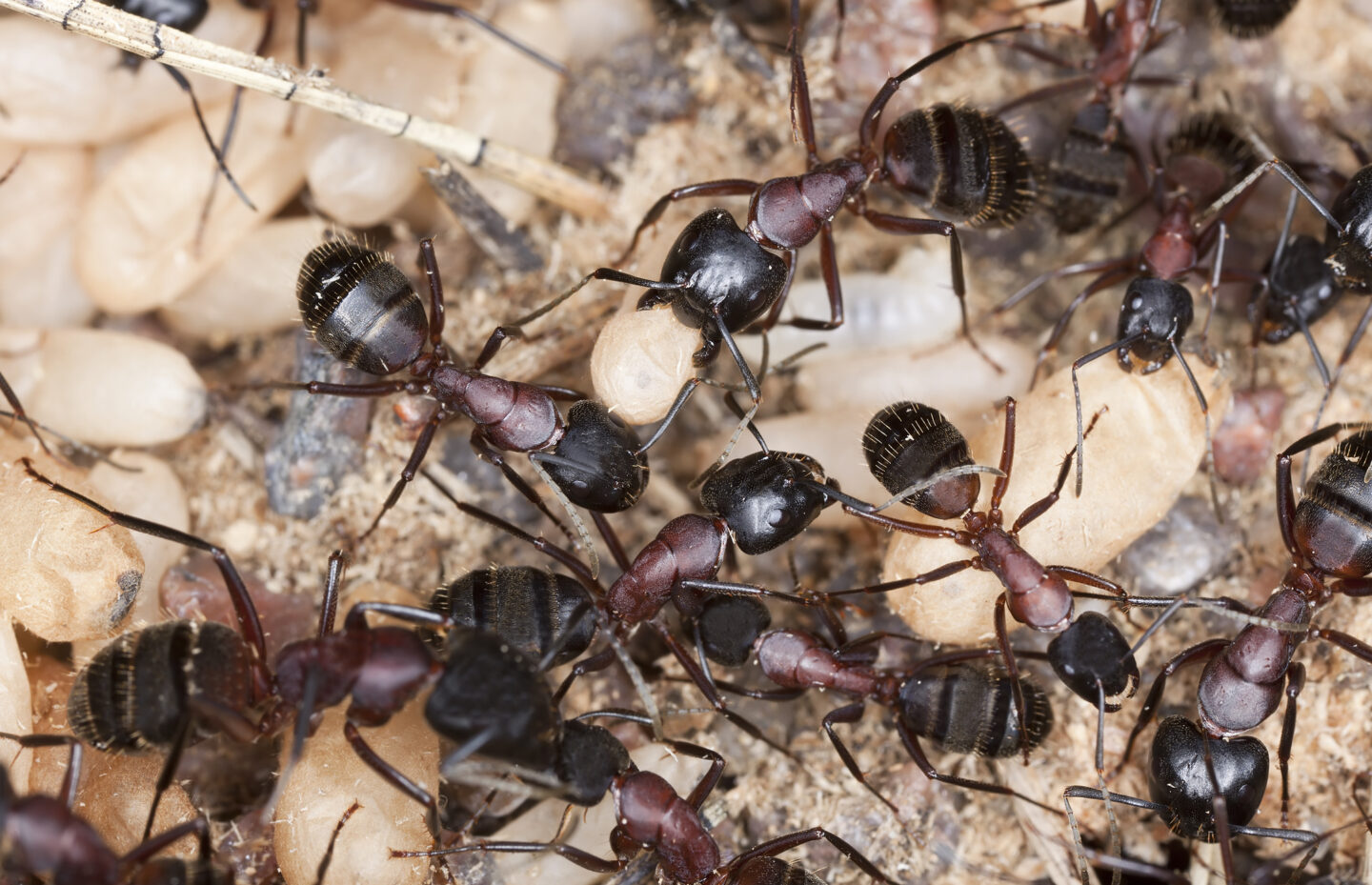
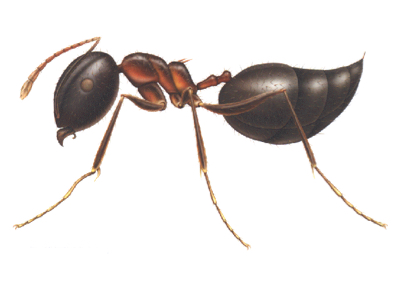
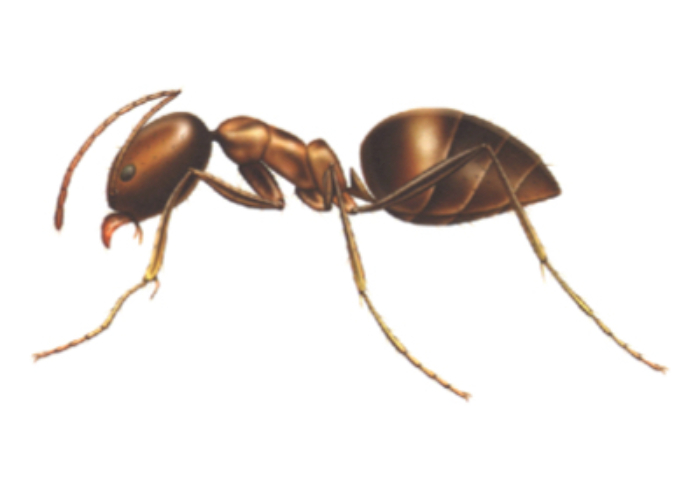
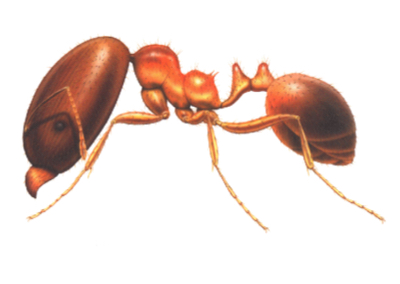
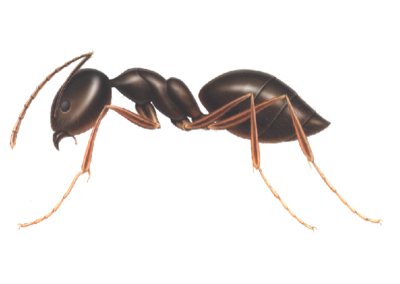
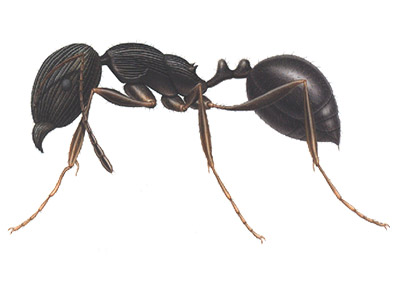
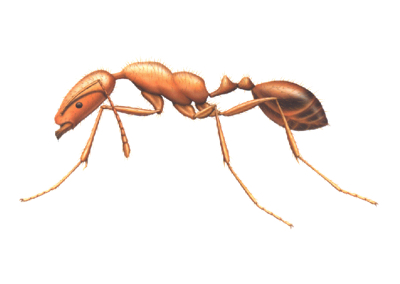
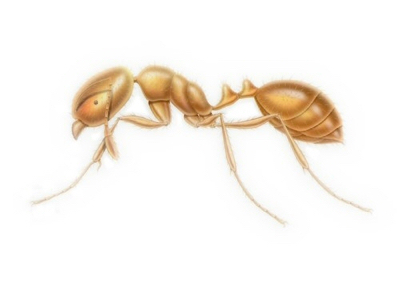
Among the largest of ants, 1/4 to 1/2″ long. The most common species is the Eastern black carpenter ant, but some are dark red or brown. Carpenter ant workers are polymorphic meaning they come in different sizes.
Habitat
Carpenter ants are amongst the most common property pest in the Midwest. Home and business owners are far more likely to face an invasion of carpenter ants than termites.
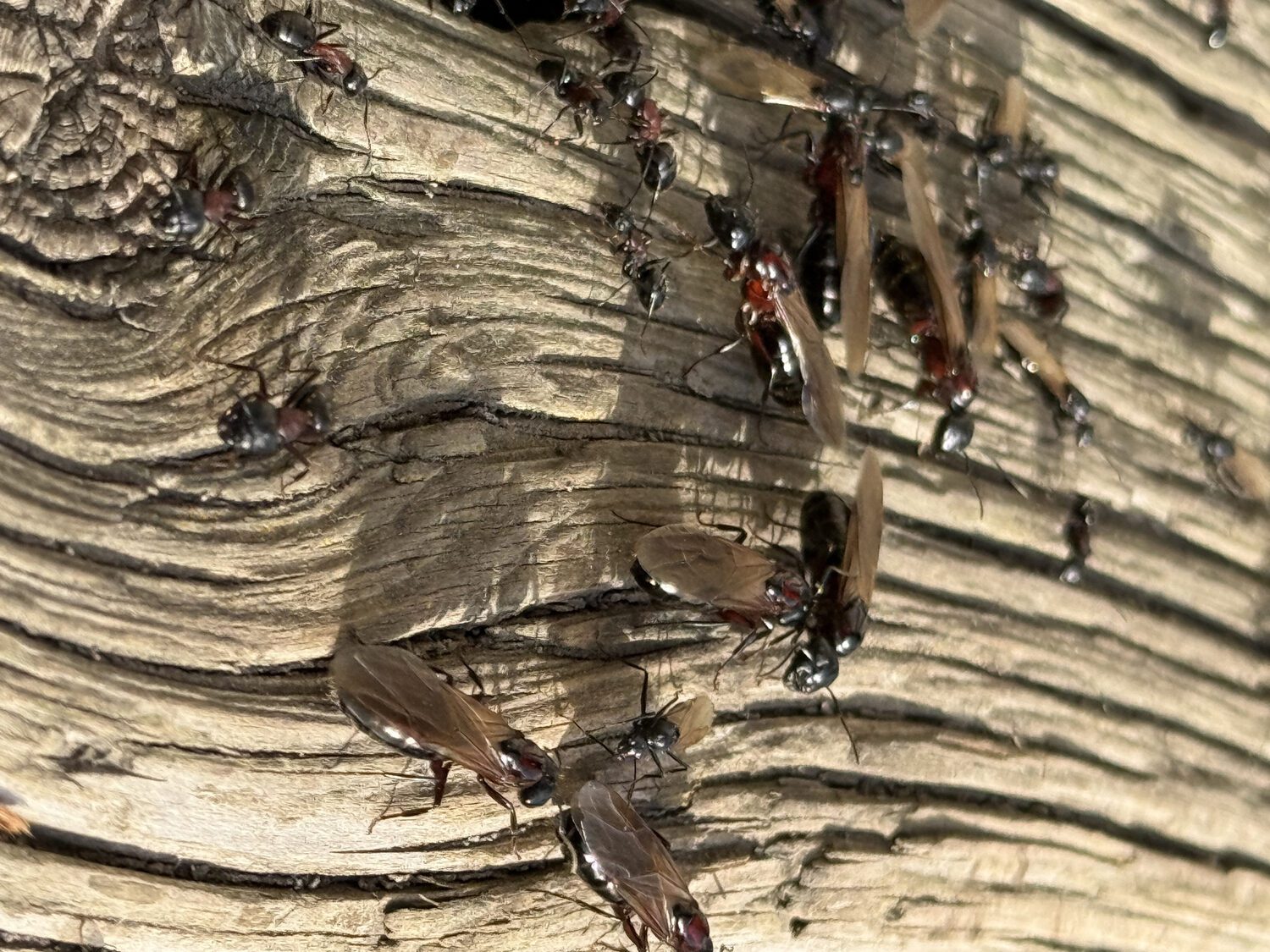
Carpenter ants get their name because they excavate wood in order to build their nests, leaving hollowed-out tunnels. These colonies require a constant source of water to survive, and are often found in wet, decayed wood such as dead limbs and tree stumps. Inside, they can be found in overly wet, poorly ventilated spaces such as crawl spaces or attics. While carpenter ants don’t eat wood, their excavations pose a property threat, making ant control imperative. In the spring, winged reproductive ants called swarmers fly out to start new colonies.
Diet
Carpenter ants are opportunistic omnivores that will feed on nearly anything—particularly sweets and protein-rich materials. They will also feed on other insects and do not eat wood. They just chew through it.
Additional Imagery

Is This Your Critter?
Maybe it is, maybe it isn’t. We can handle the identification and get you a solution to your problem quickly.
Get a remedy now. Send a message!
Why Do I Have Carpenter Ants?
Carpenter ants are attracted to conditions that provide moisture, shelter, and food.
You may be more likely to experience carpenter ants if your home has:
- Water damaged wood
- Roof leaks
- Plumbing leaks
- Poor drainage inside and outside the home
- Mulch that holds moisture
- Tree branches touching the roof
- Firewood stacked against the home
- Cracks around doors and windows
Addressing moisture problems is one of the most important steps toward long-term carpenter ant prevention.

Frequently Asked Questions
Do carpenter ants eat wood?
No. Carpenter ants excavate wood to build their nests but do not consume it. Instead they leave behind sawdust-like fragments of wood.
Are carpenter ants worse than termites?
Both pests can damage wood, but they do so differently. Termites eat wood, while carpenter ants hollow it out to create nesting galleries.
What attracts carpenter ants?
All pest needs food, water, and shelter. Carpenter ants are attracted to moisture-damaged wood caused by leaky gutters and pipes, as well as the food sources mentioned above. Carpenter ant swarmers may be attracted to light.
Do carpenter ants bite or sting?
Although carpenter ants are capable of biting, they cannot sting. They rarely bite if they feel threatened or become trapped against the skin. In most cases, these bites are minor and do not require medical treatment.
Can carpenter ants damage my house?
Yes. Large colonies can weaken structural wood over time if left untreated.
What does carpenter ant damage look like?
Carpenter ant damage appears as smooth, clean tunnels inside wood. You may also notice piles of sawdust-like debris beneath nesting sites.
When are carpenter ants most active?
Carpenter ants are generally most active from spring through early fall. They are nocturnal and typically forage during the evening and nighttime hours.
Can I get rid of carpenter ants myself?
DIY products may eliminate foraging ants, but they rarely reach the entire colony. Professional inspections help locate hidden nests and provide more effective long-term control.
Schedule Professional Carpenter Ant Control Today
If you’ve noticed large black ants, wood shavings, or signs of carpenter ant activity around your home, don’t wait for the damage to worsen.
Rose Pest Solutions has protected homes throughout Chicagoland, the Greater Rockford region, and Southern Wisconsin since 1860. Our experienced pest management professionals can locate carpenter ant nests, identify conditions contributing to the infestation, and provide effective, long-term solutions to help protect your home.
Call 1-800-GOT-PESTS? or contact us today to schedule your inspection and receive a free quote for carpenter ant control in Chicagoland, the Greater Rockford region and Southern Wisconsin.



“…most importantly, they took care of our black ant problem.”
“Knowledgeable and pleasant staff and, most importantly, they took care of our black ant problem.”
Kim W. | Homeowner
Barrington Hills, IL
You’ve got a pest problem. We’ve got your pest solution.
Whether you’ve got wasps, rodents, spiders (or you name it), we can assist with your pest problem. We can even provide same-day service. Drop us a line to schedule your pest control services today!