
Rat Birth Control in Chicago
Written by: Gigi Lubin
Rodents will gnaw on just about anything from car wires to books to soft metals and even concrete. It’s hard to imagine having to be chewing all the time but it’s a necessity for them in order to prevent their front teeth from overgrowing. With an estimated seven billion rats worldwide, the constant gnawing does a lot of damage. Our job is to mitigate the damage and keep them out. It’s a big job that requires a coordinated, community-wide effort and there is no single product or solution that solves a rat problem on its own.
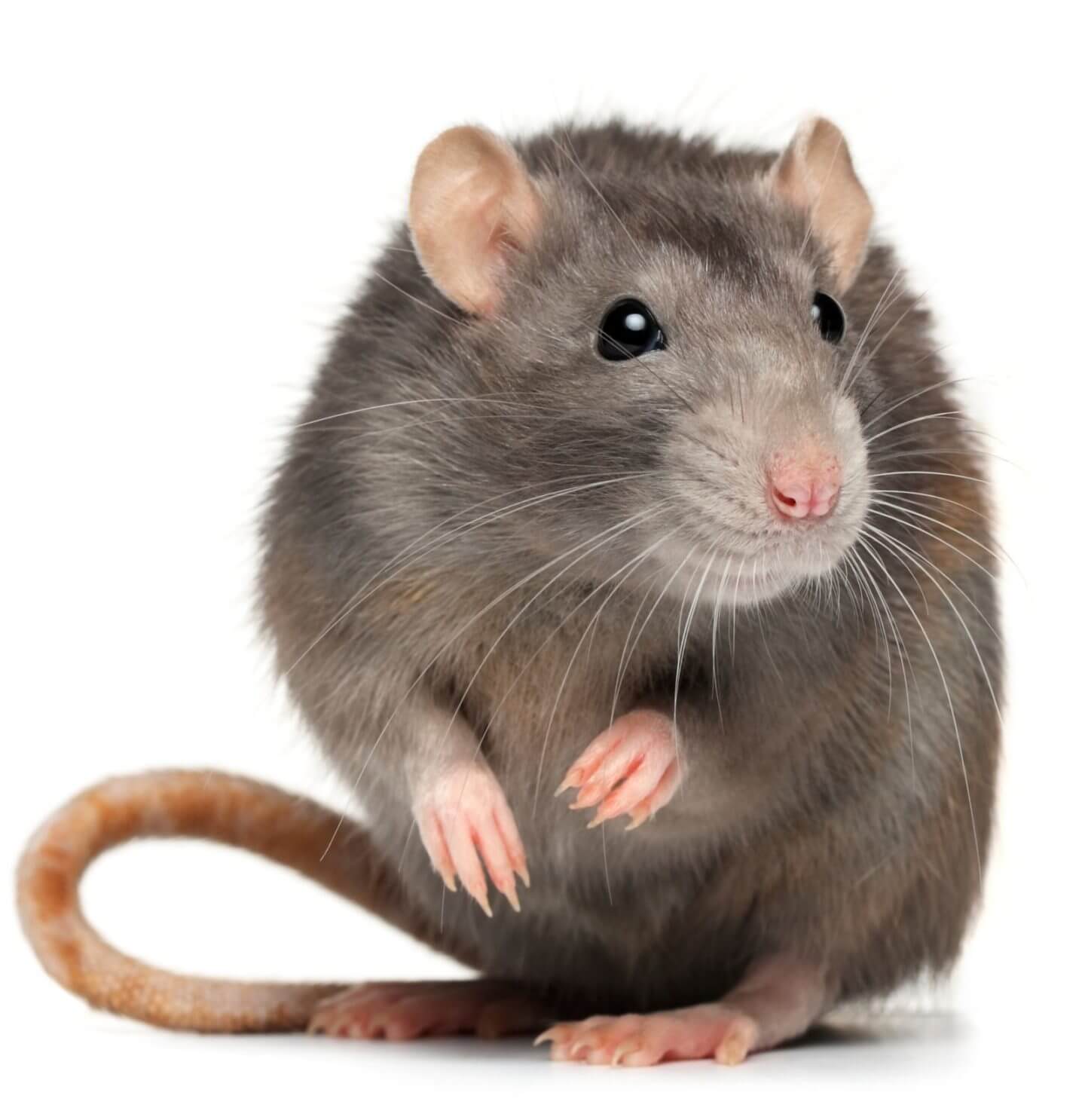
Rats have been around more than 10 times longer than modern humans. They’ve been here for between one and three million years, multiplying like crazy and they’ll be around for millions more. “We are not getting rid of rats any time soon, if ever,” Janelle Iaccino, a noted rat taxidermist and pest control expert with Rose Pest Solutions said. “The best we can do is manage them by addressing the root causes like accessible garbage, structural gaps, burrows and nesting areas, construction and a lack of coordinated neighborhood action.”
According to National Geographic, urban rat populations actually appear to be rising with climate change. “Rats are wily, highly adaptable animals. They respond to food, shelter, and access points—not just population size. Even if reproduction slows, rats will continue to thrive if conditions remain favorable,” Iaccino said.
There’s Never Just One Rat
In the U.S., the rat population is estimated to be approximately 150,000,000 with seven billion rats worldwide. Compare that with a worldwide human population of eight billion people and that’s almost one rat per person causing one giant Eek globally.
“Typically though, if you see one rat, there are several others nearby,” Iaccino said. “They carry and spread disease and can get in a house through an opening the size of a quarter meaning everyone needs to be vigilant. You’re never going to eliminate rats and there’s not a single way to do it. Not with poison or birth control.”
Recent news coverage has brought attention to the use of rat birth control in Chicago neighborhoods like Wicker Park and Lincoln Park. Rat experts say new tools like these and approaches to managing rodents are always worth discussing but there’s no way that birth control is going to eliminate rats anywhere.
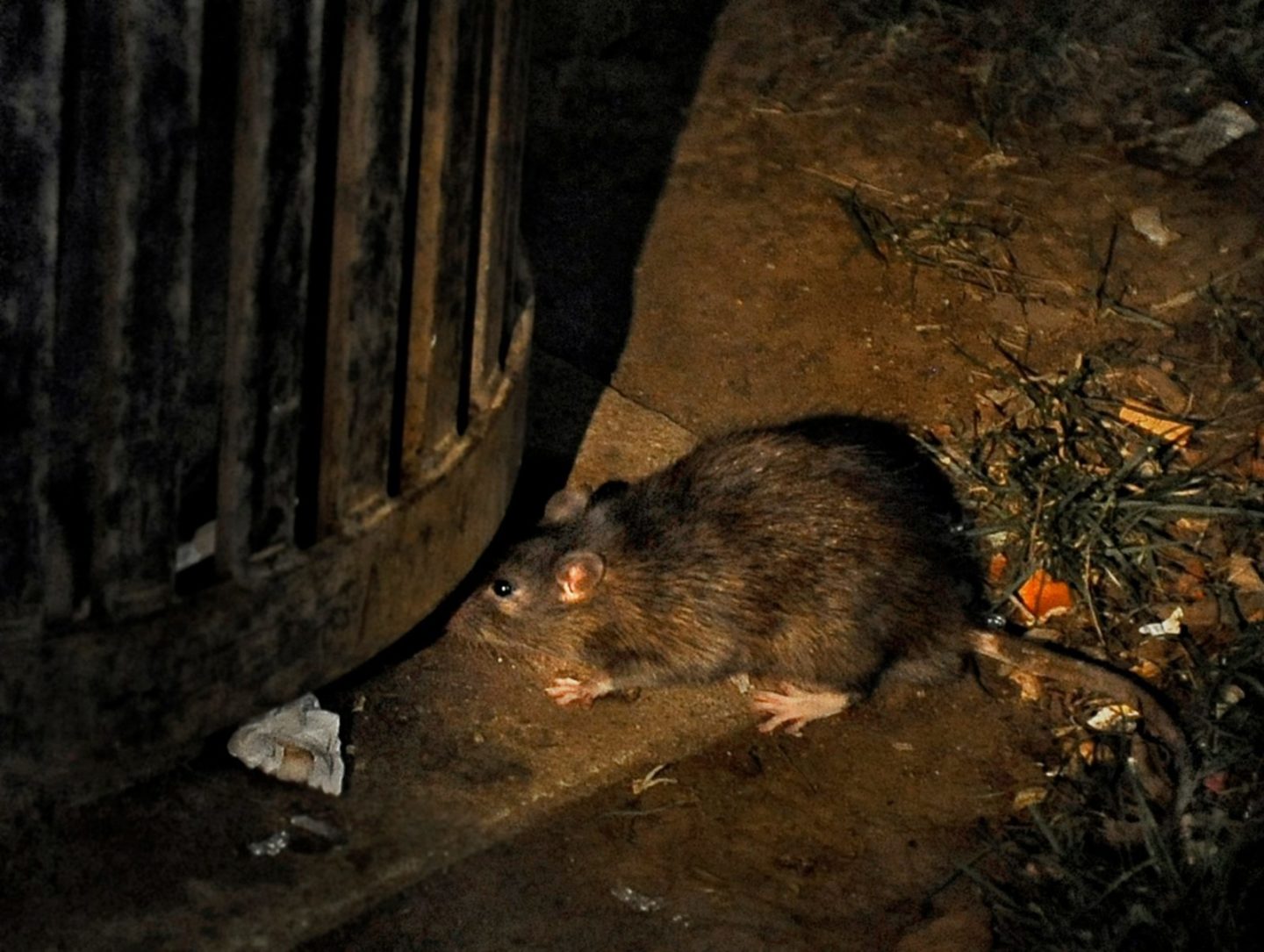
“The second you have an empty burrow or nest, other rats move in. They are opportunists. Remember, they originally came over to the U.S. as stowaways on ships,” Iaccino said.
“Fertility control is one option that may play a role in long-term population management, but that depends on a lot of variable factors, such as rodents being too shy to go into traps, competing food sources like dumpsters and dog waste, as well as environmental factors,” Iaccino said.
Fertile or Not, Rats Are Still a Public Health Threat
A non-fertile rat running around still needs to be controlled and possibly exterminated because it is a disease carrying vector. Fertile or not, the urban Norway rat, also known as the brown, sewer or wharf rat which is the most common type in the U.S., is a vector for more than 27 different pathogens, still making them a public health threat.
“In the very best-case scenario, in the open rat populations of cities, for overall impact, all the targeted colonies would have to be treated and all the peripheral colonies would have to also be treated,” Iaccino said. “Otherwise, treatments would be on-going forever. This would be a very expensive undertaking for a city or a neighborhood and would still not get rid of rats.
Population biologists on Rattus norvegicus have shown that unless populations are reduced to levels of 95%, they can rebound in 6 months, during the summer reduction, and 12 months during the winter. There is no sustainable impact and no real-world data along these lines.
“To date, with years and years of contraceptives being available, not a single formal study in a peer reviewed journal exists to show any evidence of urban rat population impact,” Iaccino said.
Effective rodent control— whether in a home, restaurant, construction site, or public space works when everyone works together. When one piece is missing, rodents return.
“Founding Father Benjamin Franklin popularized the saying that nothing in life is certain except death and taxes but all these generations later, we can also say with certainty that there are at least two other things that are certain – mosquitoes and rats,” Iaccino said. “Rose has been around for more than 165 years. Our first client was actually President Abraham Lincoln who hired our founder to keep Civil War soldiers safe from rats in the trenches. We know what we’re doing.”
Rose has branches throughout the Chicagoland area. As a long-standing business in Wicker Park, Rose Pest Solutions works directly with property owners, residents, and city agencies every day to help prevent and control rodent activity. “We’ve seen firsthand what works—and what doesn’t,” Iaccino said.

What Actually Works: A Comprehensive Rodent Control Strategy
The most effective rodent control programs use multiple tools together. This approach is often called Integrated Pest Management (IPM)—a science-based method used in cities across the country. Rose Pest Solutions specializes in this approach.
A successful program typically includes:
- Inspecting and identifying where rodents are living, feeding, and entering structures.
- Sealing openings and repairing structural vulnerabilities that allow rodents inside.
- Removing food and water sources that attract rodents in the first place.
- Tracking activity to detect problems early and measure progress.
- Using appropriate tools—such as trapping, baiting, or fertility control—based on the situation.
It is important to know that rat control is not a DIY project. Putting poison out on your own could be dangerous not only to pets but also to wildlife like owls, hawks, foxes and other animals that may consume a poisoned rat. Responsible pest management is about protecting public health—not creating risk.
Today’s professional rodent control programs:
- Use tamper-resistant equipment designed to protect children and pets
- Follow strict federal, state, and local regulations
- Target rodents while minimizing environmental impact
- Focus on prevention and long-term solutions
Community Participation Matters More Than Any Product
Rodent control is a shared responsibility.
Even the best tools will struggle to succeed if conditions remain favorable for rodents. Remember, they’ve been around for millions of years and aren’t going away any time soon. That’s why community participation is essential.
Residents and businesses can help by:
- Keeping garbage containers tightly closed
- Reporting rodent activity early
- Maintaining clean outdoor areas
- Sealing gaps around buildings
- Supporting coordinated neighborhood efforts
- Reporting rat sightings in public ways by using the 311 Chicago app
When everyone plays a role, results improve quickly and last longer.
FAQ
What is rat birth control?
Rat birth control uses fertility control products designed to reduce reproduction rates within rodent populations over time.
Is Chicago using rat birth control?
Some Chicago neighborhoods have explored rodent fertility control programs as part of broader integrated pest management strategies.
Does rat birth control get rid of rats?
No. Experts say fertility control alone will not eliminate urban rat populations without sanitation, exclusion, trapping, and coordinated community efforts. Whether the rat is able to reproduce or not, it is still a vector for disease and a public health threat.
Why are rats so common in Chicago?
Dense urban environments provide rats with easy access to food, water, shelter, and nesting areas.
What is the best way to control rats?
The most effective rodent control programs combine prevention, exclusion, sanitation, monitoring, and targeted treatment methods.
Concerned about rodent activity around your home or business? Rose Pest Solutions provides professional rodent inspections, exclusion services, and integrated pest management solutions throughout Chicagoland.