
If you’ve landed on this blog, we’re guessing one of these things just happened:
- You or someone you care about got bit by something, and now you’re Googling spider bites.
- You found a spooky-looking brown spider in the basement, and panic set in.
- Your child or partner shouted “Brown recluse!” and you’re now on damage control.
- You’ve heard stories, and now you’re wondering if you should be worried.
We get it. The thought of a brown recluse spider in your home is unsettling. But before you worry too much, let’s break down a few facts, starting with this one:

️Brown Recluse Bites Are Actually Very Rare
Despite all the hype centered around how dangerous these spiders can be, actual brown recluse bites are very uncommon. According to arachnologists (that’s a scientist that studies arachnids like spiders!) and entomologists across the country:
- These spiders prefer to hide in quiet, undisturbed places (that’s how they get their name) and generally only bite when they feel extremely threatened or trapped against the skin.
- Brown recluses are only native to parts of the Midwest – southern Indiana, southern Illinois, Missouri, and parts of Iowa and Kansas.
- Over 90% of brown recluse bites result in no reaction or minimal symptoms. Only a fraction of that rare number of those bitten have an adverse reaction or experience complications as a result.
It’s unlikely you’ve interacted with a brown recluse spider. So, what did you find instead or what might have bit you? Here are four common spiders in urban and rural areas across the Midwest that are often mistaken for brown recluses:
DISCLAIMER: It’s impossible to identify an arachnid based off bites alone – the only way to truly know where a spider bite came from is to catch the spider in action!

1. Cellar Spider (also known as “Daddy Long Legs”)
Looks like: Small (2-10mm) elongate body, very long, thin legs (about 5x their body length!), pale brown or gray.
Habits: Prefers basements, garages, and crawlspaces. Tends to settle in corners of a room or along baseboards. Builds messy, cobweb-like webs.
Bites? May TRY to bite if they are handled or threatened, but their mouths are too small to damage human skin.
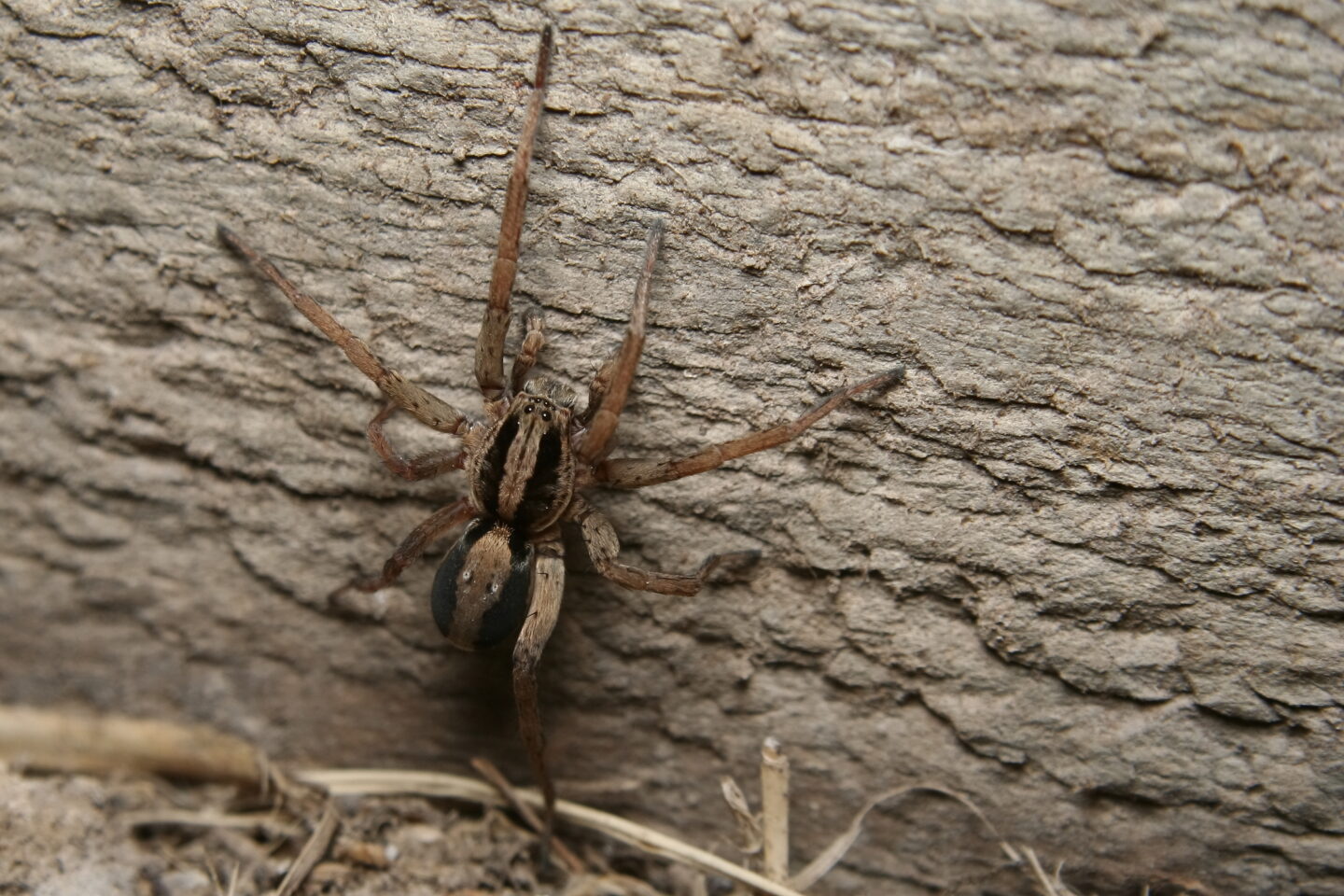
2. Wolf Spider
Looks like: Large (up to 1 ¼ inches), hairy, brown or gray with a light, vertical stripe down the middle, surrounded by two dark stripes. Fast-moving.
Habits: DOES NOT build webs. May be found near doors, garages, and outside debris.
Bites? Can bite if handled or accidentally trapped against the skin. Symptoms might include redness or localized swelling, comparable to a very mild bee sting.

3. Grass Spider (also called funnel spider)
Looks like: About ½ inch, brown or tan with dark stripes running lengthwise, similar to a wolf spider. Small, diamond-shaped abdomen with spinnerets sticking out in the back (those are the organs spiders use to make silk!)
Habits: Builds funnel-shaped webs in grass or bushes. Fast-moving and will dart out quickly when their web is disturbed.
Bites? Bites are very rare due to this spider’s shyness. Symptoms include pain, redness, itching, and swelling (very similar to a bee sting).

4. House Spider (also called cobweb spider)
Looks like: Small (1/8th to 1/4th of an inch), rounded body with mottled patterns.
Habits: Builds multiple webs in damp, undisturbed places like basements, crawlspaces, garages, or barns.
Bites? VERY rarely bites, but there have been a few recorded cases of house spider bites accompanied by pain, redness, and swelling.
How to Identify a Brown Recluse
If you see a spider you think could be a brown recluse, here’s what to look for:
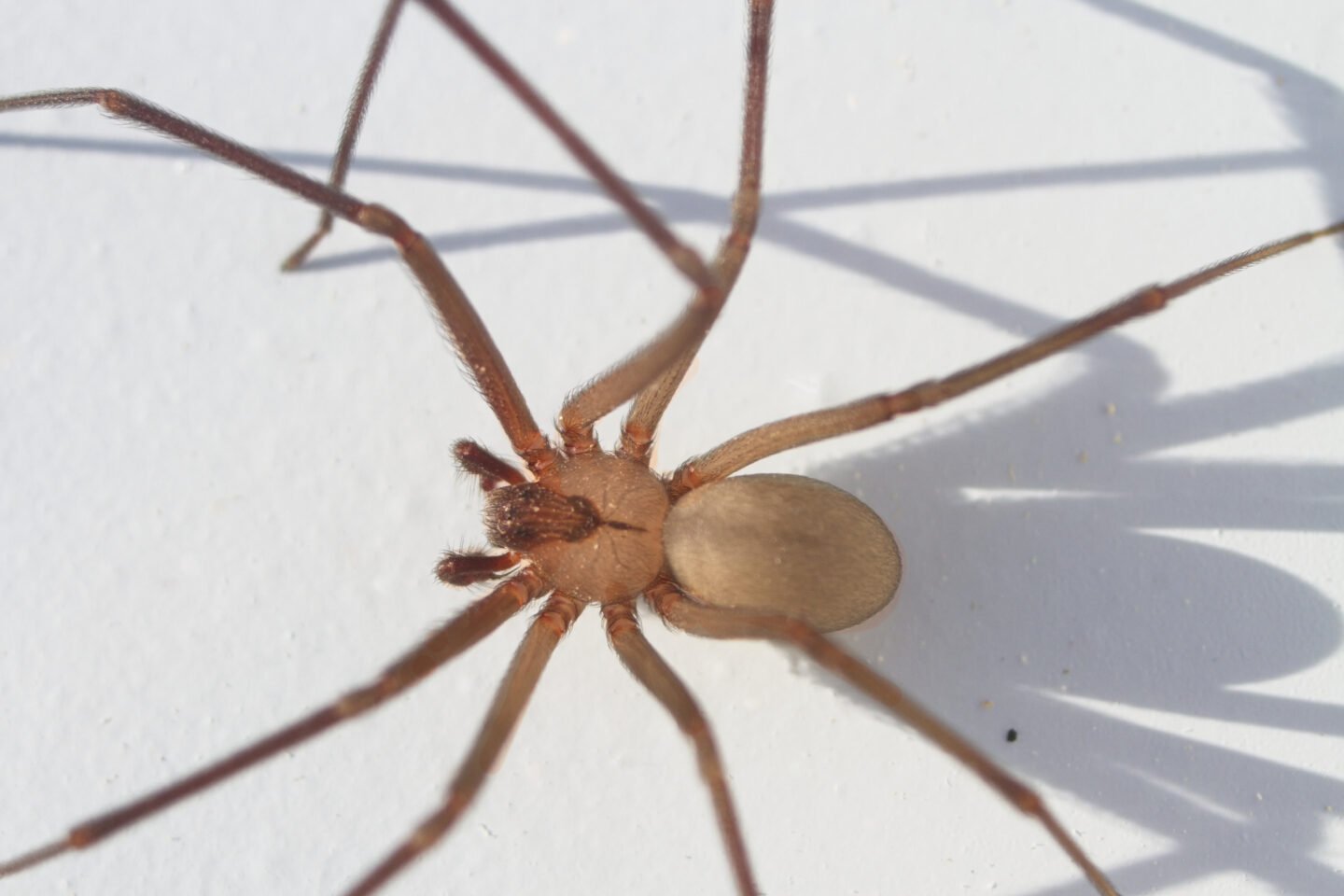
- About ½ inch in size, light to medium brown with a distinct, violin-shaped marking on its back.
- Six eyes (not eight like a typical spider) arranged in three pairs.
- No markings or bands on the legs.
- Very thin, spindly legs: not hairy like a wolf spider.
- Found in undisturbed areas like behind baseboards, inside shoes, boxes, basements, or attics.
Still unsure? Don’t worry—you’re not alone.
Need Help Identifying a Spider?
At Rose, we’re a family-owned pest control business right here in the Midwest. If you’ve found a spider and want a second opinion, send us a photo! contactus@rosepestcontrol.com We’re happy to help you identify it, free of charge.
If you’re ready to take proactive steps, we also offer free quotes for prevention and spider control services; whether for your home, garage, basement, or business.