
Few household pests make people MORE uncomfortable than cockroaches. German cockroaches are one of the most common pests that find their way into residential or commercial spaces. If you see a cockroach in your home, it is most likely a German cockroach. They are recognizable by their small size and two vertical lines on their pronotum, a part of the thorax directly behind the insect’s head. German cockroaches have a reputation of uncleanliness and sometimes come with a harmful stigma. Coming into contact with German cockroaches can be dangerous or unsanitary, as well as upsetting or even embarrassing.

However, seeing one does not always mean your home is dirty or neglected. German cockroaches are incredibly adaptable, resilient insects. They are attracted to food, moisture, warmth, and shelter, which means almost any structure anywhere can provide the conditions they need to survive.
Still, cockroaches are not pests you want to live with. If they find the right conditions inside a home or business, their populations can grow quickly. Understanding how to identify a German cockroach issue can help you decide when it is time to take action.
How Bad Is It to Live With Cockroaches?
Cockroaches pose many more issues than just being unpleasant to see. They can be a major public health threat to homes and businesses.
First, cockroaches travel through areas that contain potentially harmful bacteria. For example, they often move through drains, garbage areas, and sewer systems. Because of this, they can carry these bacteria onto surfaces where food is prepared. Cockroaches have been proven to transmit E. coli and Salmonella bacteria this way, potentially contributing to food poisoning symptoms.
Additionally, cockroach droppings, shed skins, and body fragments can trigger allergic reactions when people are continuously exposed to infestation, as well as asthma attacks in small children.
What Does It Mean If I’m Seeing Cockroaches?
Sometimes a home or business owner sees a single German cockroach and wonders if it is a random visitor, or possibly the sign of something bigger. While every situation is different, the number of cockroaches you are seeing in addition to other hints can provide helpful clues to what level of infestation one might be dealing with in their home or business.
Below is a general guide to what those sightings might mean:
How Bad Is My Cockroach Situation?
| What You’re Seeing | What It May Mean | What To Do |
| 1 cockroach | This may be a wandering cockroach that came in through a drain, grocery bag, or small exterior gap. | Stay alert and watch for additional sightings. Preventative pest management can help ensure this stays a one-time encounter. Let us know if we can give you peace of mind. |
| 2–10 cockroaches | This could indicate early activity nearby. They may be living in wall voids, under appliances, or entering from outside. | It is a good idea to investigate further and address any moisture or sanitation issues that may be attracting cockroaches. Let us know if we can help you through that. |
| 11–50 cockroaches | At this level, a breeding population is likely present somewhere in the structure. | Professional inspection and treatment are strongly recommended. Send us a message. |
| 51+ cockroaches | This typically indicates a well-established infestation that has been developing for some time. | Immediate professional pest management is needed to remove this infestation. Schedule an appointment with us. |
In many cases, German cockroaches spend most of their time during the day hidden behind walls, cabinets, and appliances. Therefore, the few you see could represent a much larger population out of sight.
German cockroaches also reproduce very quickly. One German cockroach egg case can contain up to 50 eggs. This means that a small problem can become a large infestation in a relatively short period of time. As a result, early action is always the best approach.
What if I’m Seeing Baby Cockroaches?
The number of cockroaches is not the only important factor. The size of the cockroaches, how many, and where you see them can also tell an important story.
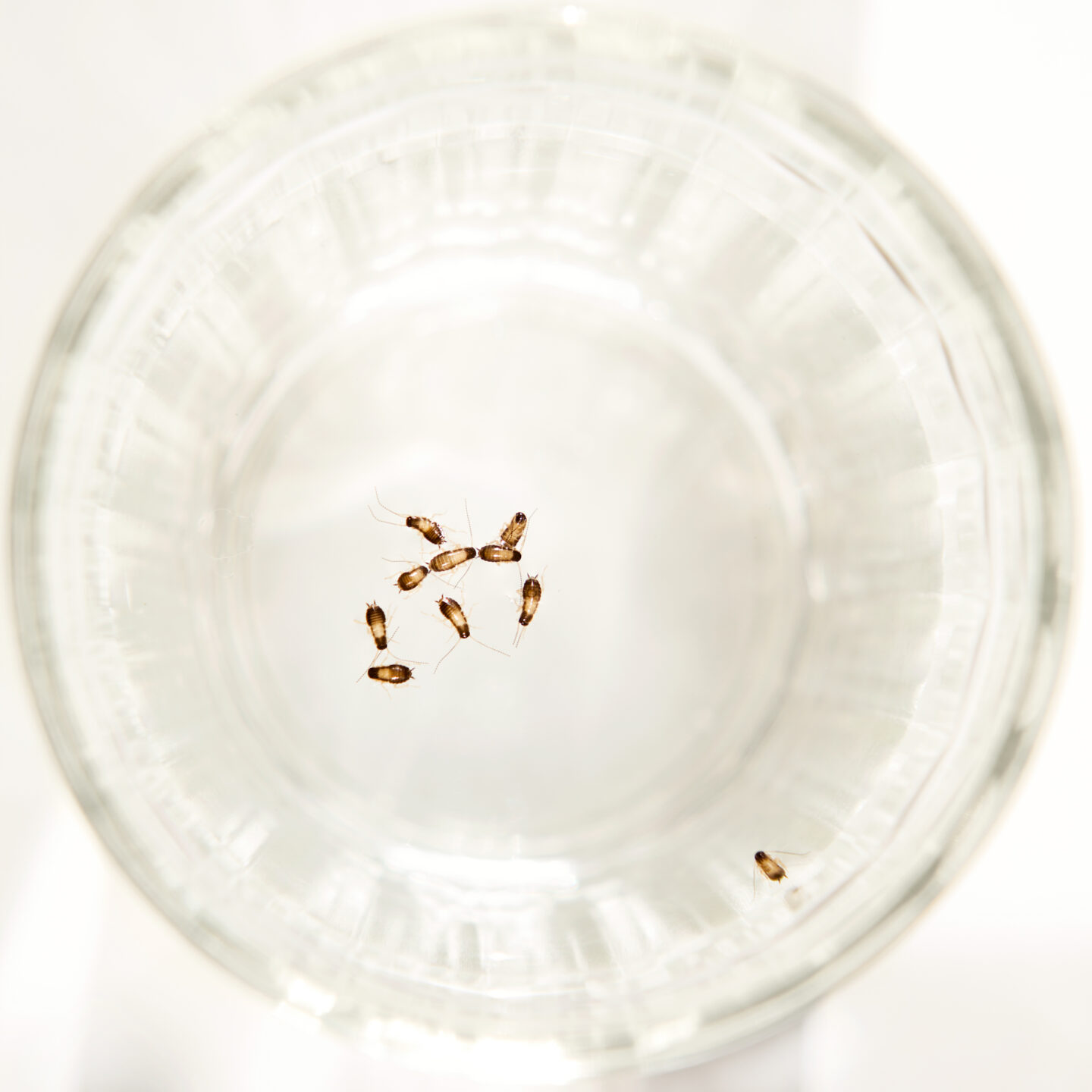
For example:
- Multiple sizes (small, nymphal roaches and larger adults) can often indicate an active breeding population.
- Cockroaches in several rooms suggest that an infestation is spreading or has spread.
- Cockroaches seen during the day can mean populations are high enough that they are being forced out of their normal nocturnal aggregation behavior.
Are There Signs of Cockroaches to Watch For?
In addition to seeing cockroaches themselves, below are some pieces of evidence to look out for:
- Droppings: Often small and resemble coffee grounds or pepper. The quantity of droppings can often indicate how severe of an infestation you are dealing with.
- Shed Skins: As immature cockroaches grow, they need to shed their rigid exoskeletons. Seeing these skins indicates that there are young, immature cockroaches close, suggesting a breeding population.
- Egg Cases: Female cockroaches lay their eggs in small bean-shaped cases called oothecae. Spotting these cases shows that there is a breeding population nearby.
Seeing one of these pieces of evidence paired with a high quantity of cockroaches further indicates an infestation.
How Do I Make Sure I Don’t Get Roaches?
Here are the top 5 things you can do to make sure you don’t get cockroaches.
- Eliminate their food sources
Store food in sealed containers. Clean up crumbs and spills right away. Don’t leave food on the stove or dishes in the sink overnight. Don’t leave pet food out overnight. - Eliminate moisture sources
Cockroaches will be drawn to water, sometimes even more than food. Fix leaky pipes. Use dehumidifiers in damp areas. Ensure proper ventilation in kitchens and bathrooms. - Seal gaps, cracks and crevices
Cockroaches will enter from neighboring units in apartment buildings, garages or wall voids. Caulk cracks and crevices around windows, and baseboards. Repair screens with holes or cuts in them. Close gaps around utility lines and pipes. Install door sweeps and weather stripping around doors. - Reduce clutter where they like to hide and breed
Cockroaches like to hide in dark, tight places. They like to be touching on all sides. Cardboard and paper bags are ideal for them to hide and breed. Reduce clutter in kitchens, basements and storage areas. Use plastic bins instead of cardboard boxes to store items. Keep areas clean and dry. - Take out the trash regularly.
Nothing screams roach motel louder than hot garbage. Clean out trash and recycle bins regularly. Use tight-fitting lids. Keep outdoor dumpsters closed.
Are Bugs Supposed to be Bad This Year?
The National Pest Management Association, or NPMA, has issued their predictions for pest populations we can expect this Spring and Summer by region in the U.S. The image below will show you what pests you can expect and where. Unfortunately for us here in the Midwest, we can expect to see rising temperatures trigger flies, ticks, ants and cockroaches. And it will usually coincide with rainfall. Moisture is what insects thrive on.
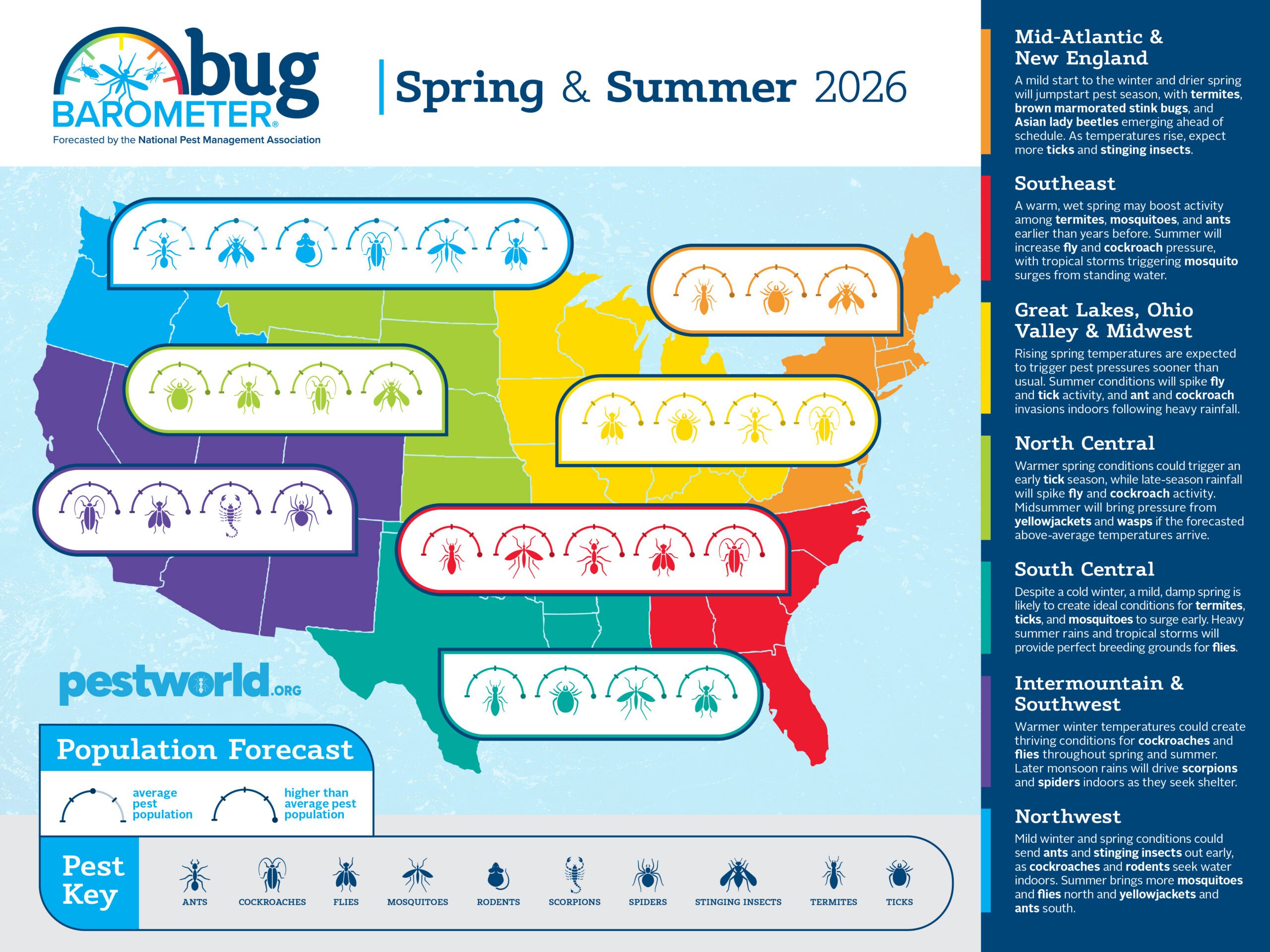
Now that you know what’s right around the corner, you are in a power position. Take action now to prevent any of these pests from getting too close for comfort. Do some spring cleaning. And keep it clean! Sanitation and making sure you’re not making it easy for cockroaches to take over will go a long way. German cockroaches are very resilient insects. However, they are much easier to control when problems are addressed early and preventatively.
If you are seeing multiple cockroaches of different sizes, or sightings in several rooms, it is a good idea to have the situation evaluated. Reach out to us to inspect your home or business.
Professional pest management specialists can correctly identify what pest you are dealing with, locate hiding areas, and develop a treatment plan unique to your home or business designed to solve the problem at the source.