

Your pantry is one of the most important storage spaces in your home — and unfortunately, one of the most vulnerable. Dry goods, pet food, crumbs, and warmth create an ideal environment for pests that are constantly searching for reliable food sources.
Pantry pest problems don’t mean your home is unclean. In many cases, pests are brought inside unknowingly through grocery purchases or deliveries. Once they find food, they settle in fast. That’s why understanding the most common pantry pests and how to prevent them is the key to keeping your food protected.
Use the Pantry Pest Prevention Guide below as a visual reference to identify common pantry pests, understand what attracts them, and learn why quick action matters.
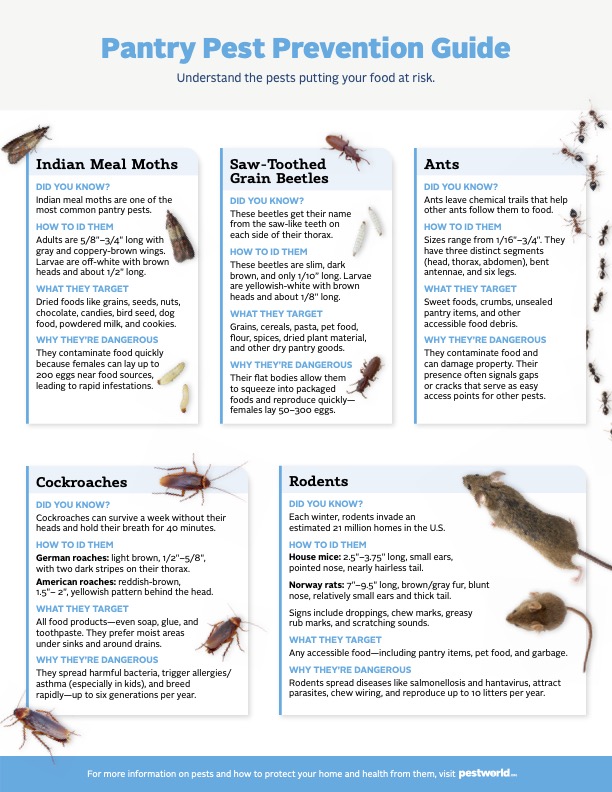
Common Pantry Pests Found in Homes
Pantries offer everything pests need to survive: food, shelter, and limited disturbance. Even well-organized homes can experience pantry pest activity, often without realizing how the pests got there in the first place.
Indian Meal Moths
Indian meal moths are among the most frequently reported pantry pests. Homeowners often notice the adult moths first, flying around kitchens or near cabinets. The real damage happens at the larval stage, when they infest dry foods such as flour, cereal, grains, baking mixes, chocolate, nuts, and pet food. Because these moths reproduce quickly, a small issue can escalate before it’s noticed.
Saw-Toothed Grain Beetles
Saw-toothed grain beetles are tiny but persistent. Their slim, flattened bodies allow them to slip into packaged foods, even when packaging appears sealed. They are commonly found in pasta, rice, flour, spices, cereals, and other dry goods. Infestations often go unnoticed until multiple items are affected.
Ants
Ants are attracted to accessible food sources, especially sweets and crumbs. Once one ant finds food, it leaves a chemical trail that leads others directly to the same spot. Ant activity in the pantry usually indicates an entry point nearby and can quickly grow into a larger problem.
Cockroaches
Cockroaches are opportunistic pests that feed on a wide range of materials, including food products and household items. They are often drawn to pantry areas because of food residue and moisture near sinks or drains. Beyond contaminating food, cockroaches are known to spread bacteria and trigger allergy or asthma symptoms.
Rodents
Rodents such as mice and rats will consume nearly any available food, including pantry items and pet food. They contaminate food supplies, spread disease, chew through materials, and reproduce rapidly. Pantry sightings are often just one sign of a larger rodent issue within the home.
Why Pantry Pest Problems Escalate Quickly
Pantry pests rarely stay contained. Once food packaging is compromised, contamination spreads, and affected items should be discarded. Many pantry pests reproduce rapidly, which is why infestations often seem to appear overnight.
If pests, droppings, larvae, webbing, or damaged packaging keep showing up, the issue is likely established and requires more than basic cleanup.
Practical Ways to Prevent Pantry Pests
Consistent prevention habits can significantly reduce the risk of pantry pest problems.
- Keep pantry spaces clean by wiping shelves, sweeping floors, and cleaning spills immediately. Periodically vacuum behind appliances and inside cabinets.
- Use proper food storage by transferring dry goods and pet food into airtight containers. Dispose of trash regularly and avoid leaving food out overnight.
- Inspect pantry items regularly, removing expired products and checking new groceries or deliveries before storing them.
- Seal entry points around doors, windows, pipes, and utility openings to reduce pest access.
- Control moisture by fixing leaks, clearing drains, and checking under sinks or appliances for damp areas.
When Professional Pest Control Is Needed
If pantry pests continue to appear despite prevention efforts, or if rodents or cockroaches are involved, professional pest control is recommended. These pests can pose health risks and are often part of a larger issue within the home.
A licensed pest professional can identify the source, stop active infestations, and put long-term prevention measures in place.