
Carpenter Bee
Our remedy for carpenter bee control
Carpenter bees play an important role in pollinating flowering plants, but they can become a serious nuisance when they begin nesting in wooden structures around your home. Rose Pest Solutions provides professional carpenter bee control to help homeowners throughout Chicagoland, the Greater Rockford region, and Southern Wisconsin protect their property from recurring activity and wood damage.
Unlike termites, carpenter bees do not eat wood. Instead, they bore perfectly round holes into untreated or weathered wood to create tunnels where they lay their eggs. As these galleries are reused and expanded year after year, they can contribute to damage in decks, porches, fences, eaves, fascia boards, pergolas, sheds, and other exterior wood surfaces.
Keeping exterior wood in good condition by repairing moisture damage, replacing deteriorated boards, and addressing water intrusion can also help reduce the likelihood of carpenter bee activity and other wood damaging pests.
For year round protection, ask about Rose Pest Solutions’ Healthy Home Maintenance PLUS Sentricon® Program, which helps safeguard your home from carpenter bees and a variety of other common wood destroying insects.
Carpenter Bee Control Services in Chicagoland, the Greater Rockford region and Southern Wisconsin
Although staining, painting, or sealing exposed wood can make nesting sites less attractive, these measures alone may not eliminate an active infestation. Professional carpenter bee control targets existing nesting activity, and once bees are no longer active, the entrance holes can be properly repaired to discourage future use.
Rose Pest Solutions provides professional carpenter bee control throughout Chicagoland, the Greater Rockford region, and Southern Wisconsin. Our experienced pest management professionals understand the seasonal pest pressures homeowners face across the Midwest and deliver customized solutions to help protect homes and wooden structures from carpenter bee activity.
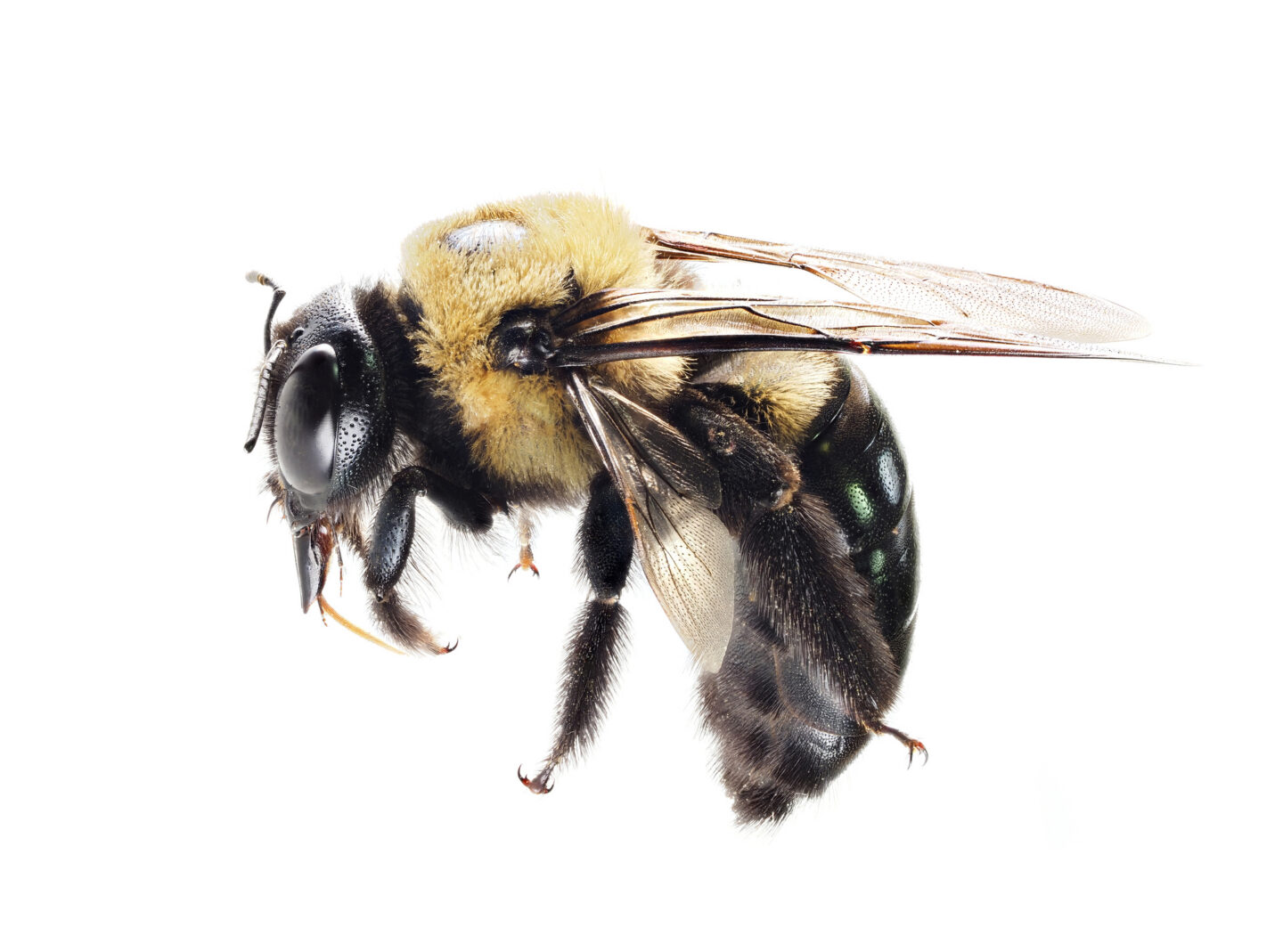
How to Identify a Carpenter Bee
Appearance
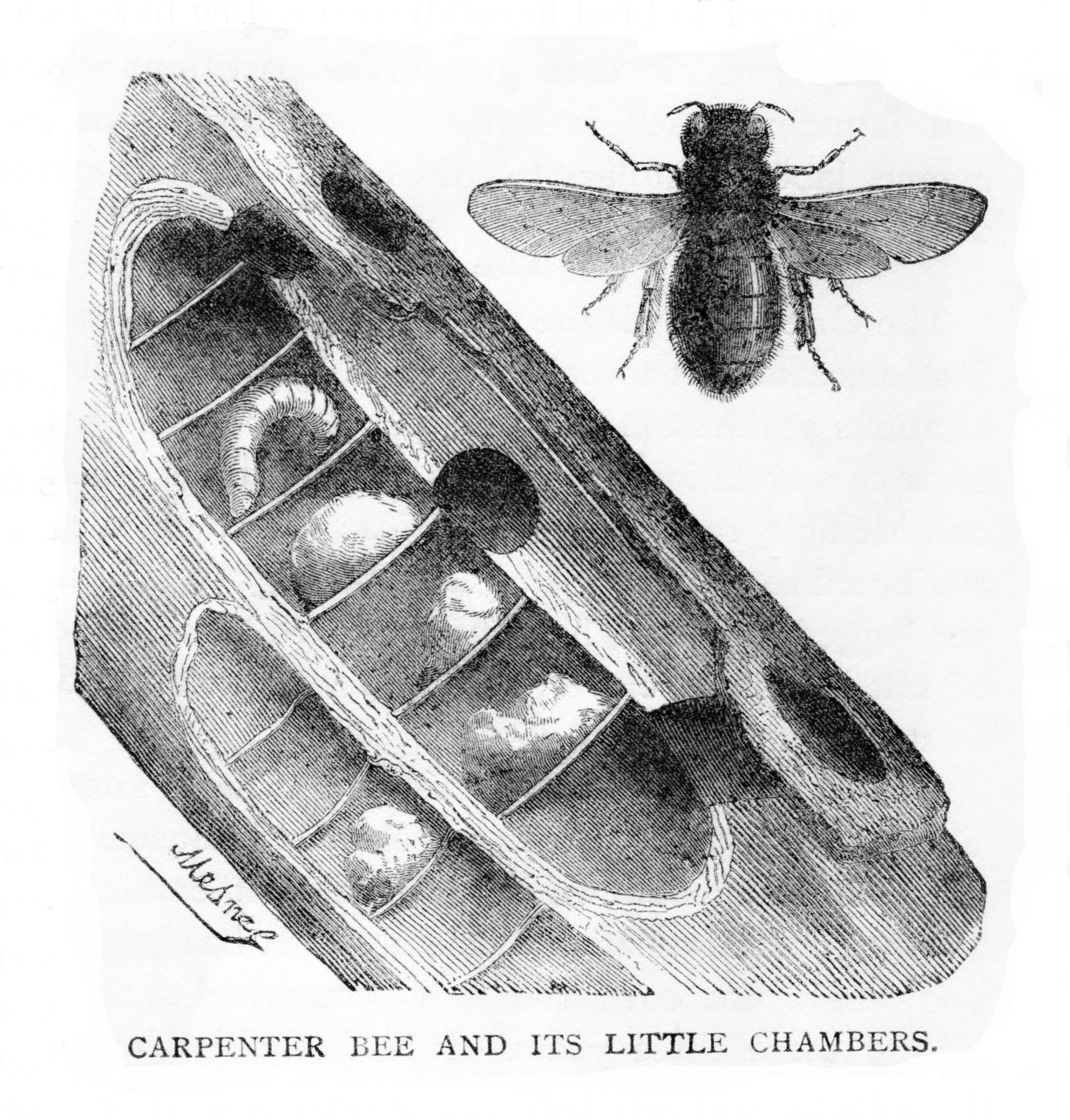
Carpenter bees resemble bumblebees in both size and color at about 1″ long. Their abdomens are all black, with few yellow hairs on their thorax and a characteristic bald circle in between their wings.
Habitat
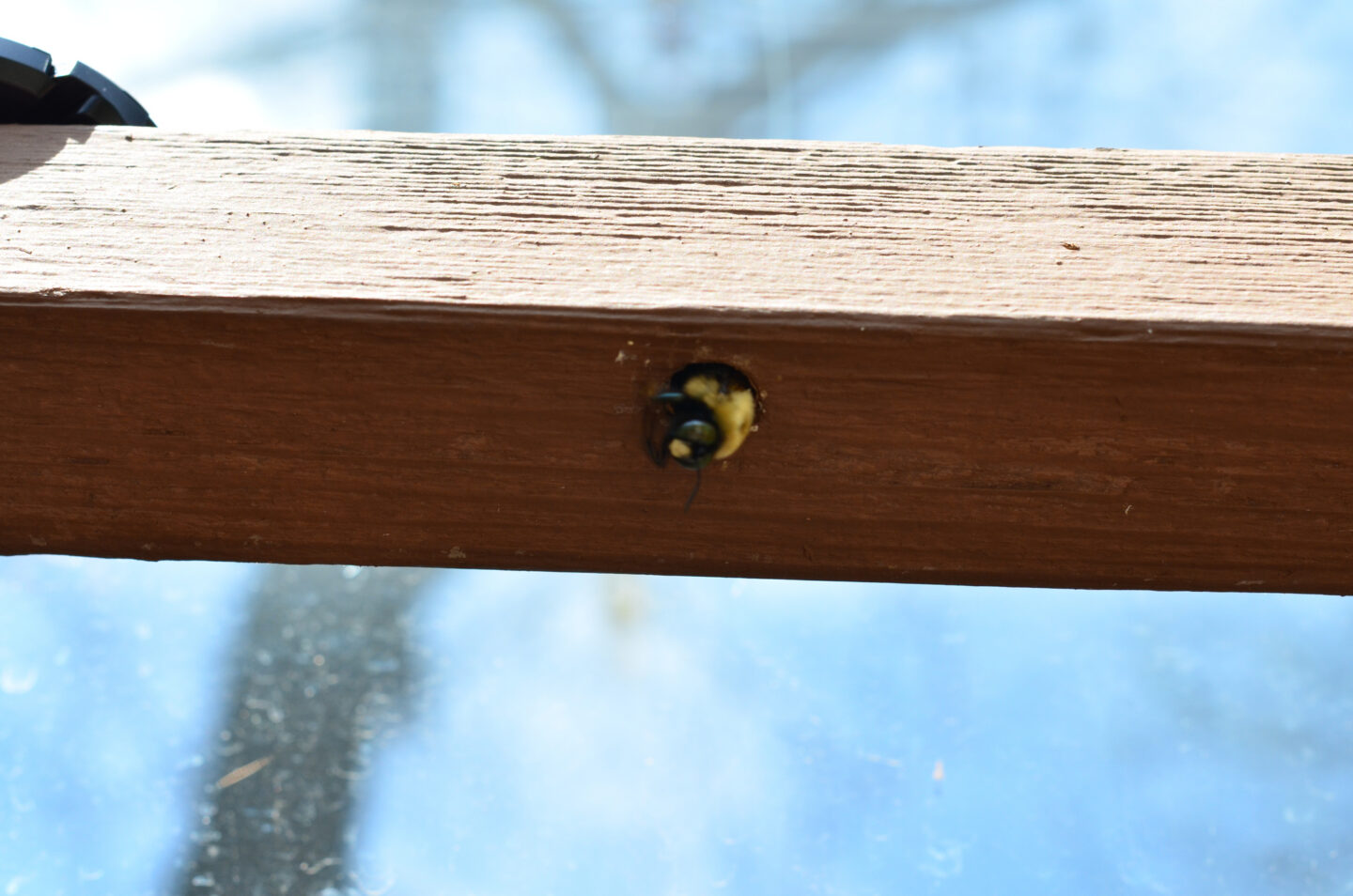
Carpenter bees get their name from their habit of boring into wood to make galleries where they raise their young. In natural habitats, they live in logs and dead tree limbs, while around homes they target bare wood decks, fences and window sills. Although they prefer weathered or bare wood, they will still infest painted or treated wood. Like carpenter ants, the softer or more moisture-damaged the wood is, the more attractive it is to these bees. While they do not pose a public health threat, their nest building does damage wood.
Diet
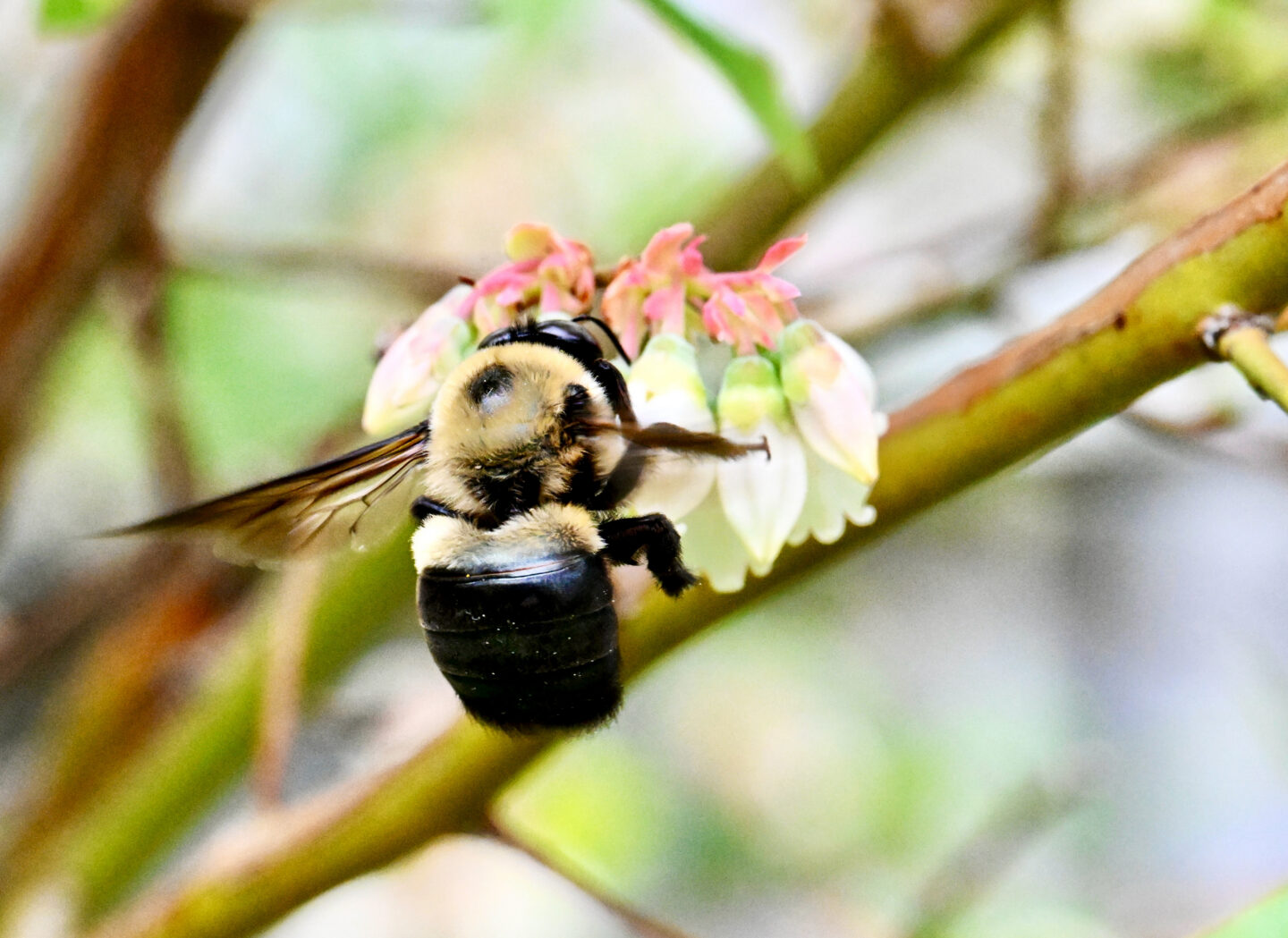
Carpenter bees feed on pollen shaped into little balls we call bee bread that they use to feed their young and nectar.
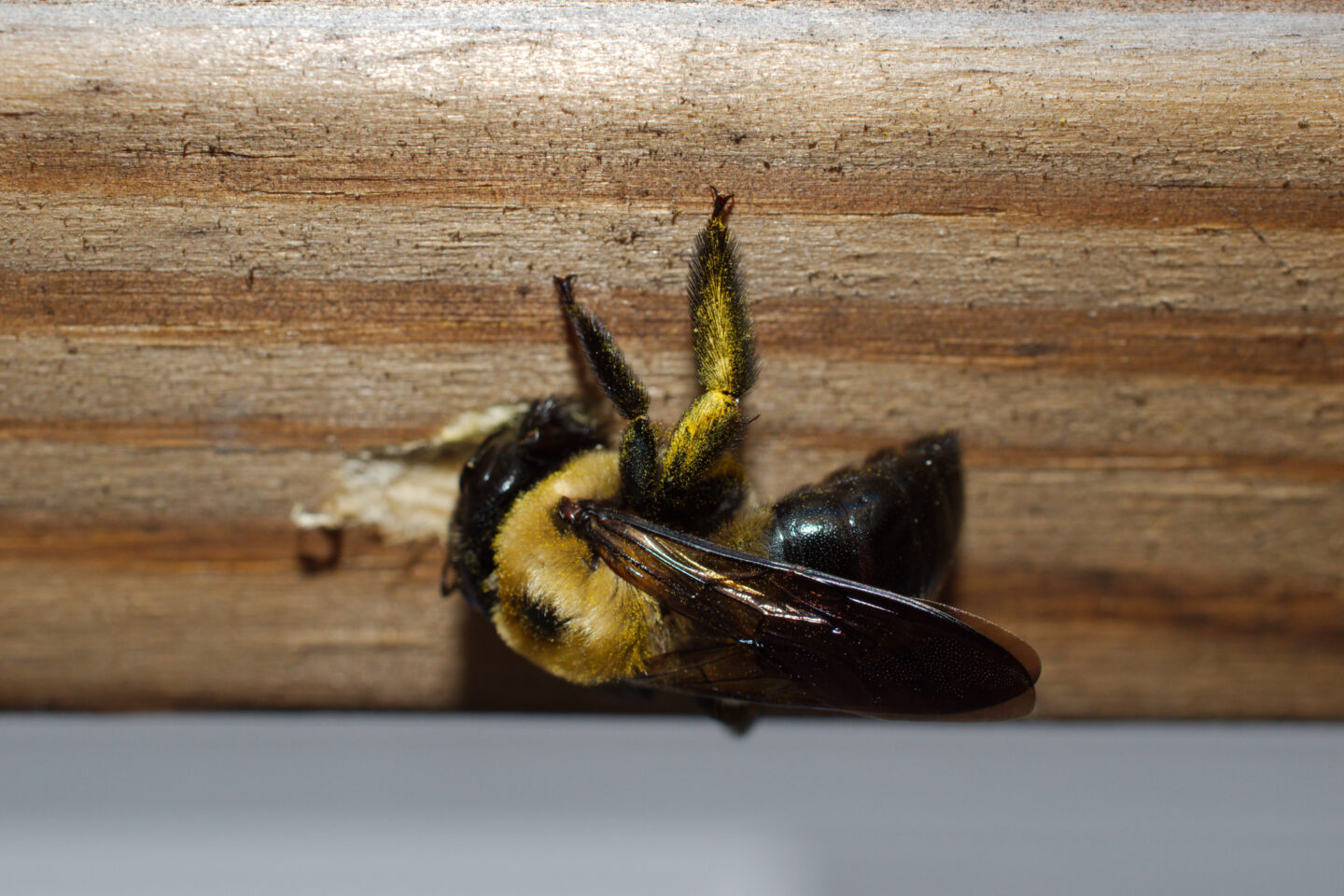
Is This Your Critter?
Maybe it is, maybe it isn’t. We can handle the identification and get you a solution to your problem quickly.
Get a remedy now. Send a message!
Carpenter Bee FAQs
Are Carpenter Bees Dangerous?
Carpenter bees are not aggressive toward people. Male carpenter bees may hover near nesting sites and appear intimidating, but they do not have stingers. Female carpenter bees can sting, although this is uncommon and usually only occurs if they are directly handled or threatened for example accidentally getting pressed up against the skin or home improvement projects near their galleries.
Can Carpenter Bees Damage My Home?
Yes. Carpenter bees can cause cosmetic and structural damage by boring tunnels into exposed wood surfaces around the home. Common nesting areas include decks, railings, soffits, fascia boards, fences, pergolas, porches, and outdoor furniture. Repeated activity over multiple seasons may expand the tunnels and increase damage.
What Attracts Carpenter Bees?
Carpenter bees are attracted to unfinished, untreated, stained, moisture-damaged, or weathered wood. Softwoods such as cedar, pine, redwood, and cypress are especially appealing. Homes throughout the greater Chicago region with exposed exterior wood are more vulnerable to carpenter bee activity during spring and summer.
When Are Carpenter Bees Most Active?
Carpenter bees are most active during the spring and early summer months when adults emerge to mate and build new nesting galleries. Homeowners often notice increased bee activity around decks, porches, eaves, sheds, and wooden trim during warm, sunny weather.
How Can I Tell If I Have Carpenter Bees?
Some common signs of carpenter bee activity include:
- Small, perfectly round holes about a half of inch in diameter in wood surfaces
- Sawdust-like debris beneath nesting areas
- Bees hovering around wooden structures
- Yellow or brown staining near entry holes
- Increased woodpecker activity around damaged wood
If carpenter bees are left untreated, they may return to the same nesting areas year after year.
Do Carpenter Bees Come Back Every Year?
Yes. Carpenter bees often reuse and expand old nesting tunnels if the excavation holes remain untreated or unsealed. Over time, repeated nesting activity can increase both cosmetic and structural damage around the property.
How Can I Help Prevent Carpenter Bees?
Homeowners can help reduce carpenter bee activity by:
- Painting or sealing exposed wood, reducing unfinished exterior wood surfaces
- Repairing damaged or rotting wood and filling old nesting holes after treatment
- Fixing gutter leaks to minimize structural moisture damage to wood
- Scheduling seasonal inspections and preventative treatments
Professional carpenter bee control services can help manage active infestations and reduce the likelihood of future nesting activity.
Are Carpenter Bees Pollinators?
Yes. Carpenter bees are pollinators that help support flowers, gardens, crops, and native plants throughout the Midwest. While they play an important ecological role, their nesting behavior can still create problems for homes and wooden structures. Installing mason bee houses away from the structure may reduce the chance of reinfestation around your home as well as support pollination.
What Areas Does Rose Pest Solutions Serve for Carpenter Bee Control?
Rose Pest Solutions provides professional carpenter bee control services throughout the greater Chicago area within a 50 mile radius of our branch locations in Chicago, Wheeling, Gurnee, Lombard, Rockford, and Racine, WI. Our team helps homeowners identify carpenter bee activity, protect vulnerable wood structures, and reduce recurring infestations with targeted treatment and prevention solutions.

Schedule Professional Carpenter Bee Control Today
If carpenter bees are damaging your home or outdoor structures, don’t wait for the problem to get worse.
Rose Pest Solutions has been helping homeowners protect their properties since 1860. Our experienced pest management professionals can identify carpenter bee activity, help prevent further wood damage, and recommend effective, long term solutions to protect your home.
Call 1-800-GOT-PESTS? or contact us today to schedule your inspection and get a free quote for carpenter bee control in Chicagoland, the Greater Rockford region, and Southern Wisconsin.



“He even identified the pest (carpenter bee) that was giving us the most grief and did extra treatment for that.”
“The technician was very polite and knowledgeable. He even identified the pest (carpenter bee) that was giving us the most grief and did extra treatment for that. He arrived on time, got right to work, and answered all questions. Great job!”
Barb R. | Homeowner
Kenosha, WI
You’ve got a pest problem. We’ve got your pest solution.
Whether you’ve got wasps, rodents, spiders (or you name it), we can assist with your pest problem. We can even provide same-day service. Drop us a line to schedule your pest control services today!

Safe For Your Family and Business
We’re licensed, trained, and certified by the Departments of Public Health and Agriculture, using EPA-regulated materials, always.
Attacking Infestations at the Root
We don’t come in spraying. We evaluate the root of your problem, and recommend and enact pre-emptive measures before any chemicals are used.
Assessments Before Any Contracts
Our Customer Care Center walks you through every service, every charge, and every solution before you agree to anything. Our commitment is to you.