
How to Get Rid of Stink Bugs (and Other Fall Invaders)
As summer fades into fall, you may notice swarms of insects clinging to the sunny side of your home. Maybe a few brave ones have made it inside! Stink bugs, boxelder bugs, Asian lady beetles, and even cluster flies are all part of a group known as overwintering pests. These bugs are not moving in to raid your pantry or chew your furniture. Instead, they’re just looking for a warm place to spend the winter. Unfortunately, your home is prime real estate. You may be wondering how to get rid of stink bugs and other fall invaders. Continue reading for all the information you need to know!

Who are These Fall Invaders?
Below are the four most common overwintering pests you might encounter in the Midwest:
Brown marmorated stink bugs (BMSB) originated in Asia but have spread across much of the U.S. During the warmer months, they live outdoors, feeding on crops, fruits, and plants. But once temperatures start to dip in fall, they begin looking for sheltered spaces to ride out the cold.
Cluster flies are slightly larger than house flies, and tend to invade, as well as die in homes in big groups (hence the name!). They may be attracted to lights in a home. Cluster fly young feed on earthworms in the soil, emerging as adults near your home. An influx of dead insects like cluster flies can attract other scavenging pests.
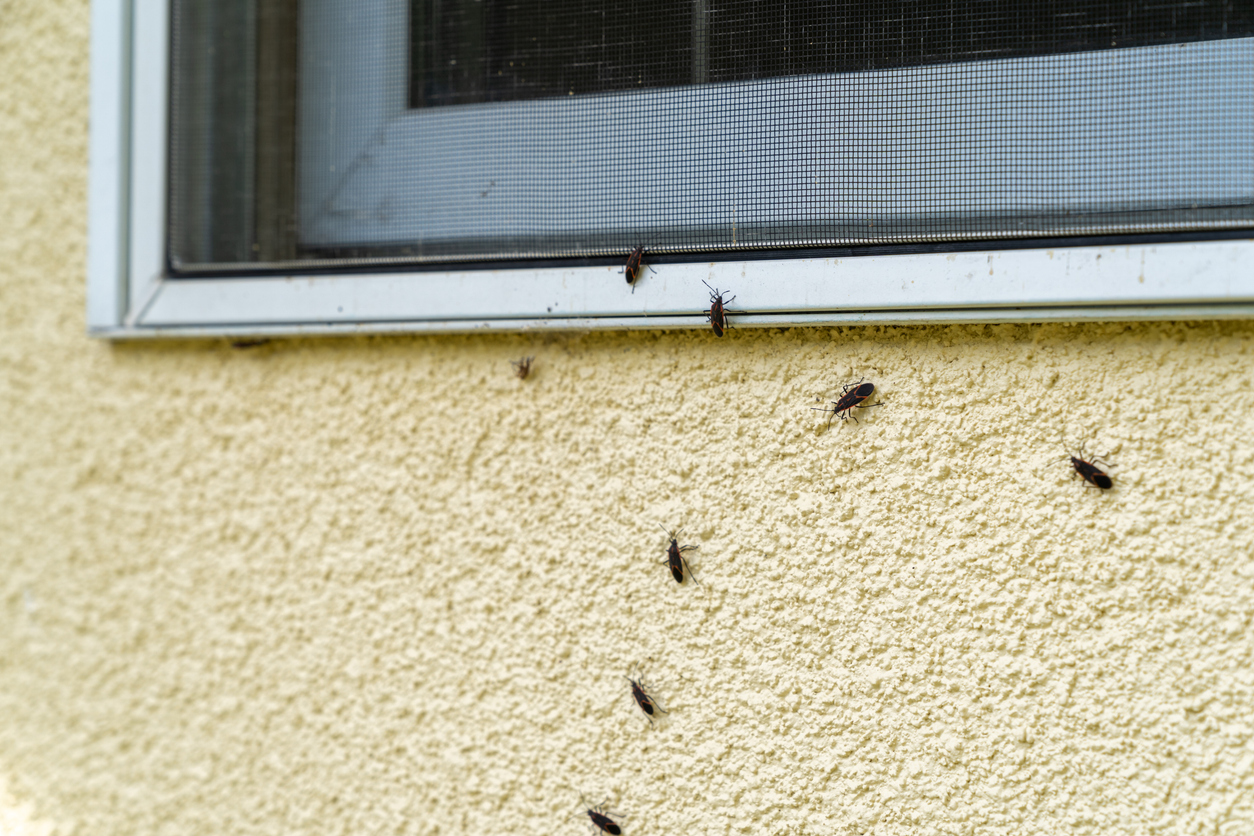
Boxelder bugs are often seen gathering by the hundreds near homes with boxelder, maple, or ash trees. They are mostly black with red striped markings around the edge of their body, making an upside down “V” shape.
Asian lady beetles resemble harmless native ladybugs but can be an annoying fall invader. These ladybugs vary a lot in color and spots; they can even have no spots! They also originated in Asia, but were brought into the US to control aphid populations and accidentally became a pest themselves.
Why Do They Stick Around Houses in the Fall?
On sunny days, you may notice hundreds of these pests congregating on south- and west-facing walls. These insects prefer to rest here because those walls are the most exposed to sunlight throughout the day. Before they attempt to invade a home, overwintering pests like to soak up those last bits of sun as summer comes to a close and fall begins. In nature, they would seek refuge for the winter under tree bark or in rocky crevices. In neighborhoods, your home provides the perfect substitute. Once a few bugs find a spot, pheromones (invisible chemical messages) can attract even more.
Are These Pests Dangerous or Destructive?
The good news: overwintering pests are more of a nuisance than a true danger. They will not feed, breed, or develop any further once they are indoors. These fall invaders will not chew through wood or wiring or cause any significant structural damage. However, they can:
- Stain walls, curtains, and upholstery.
- Release strong defensive odors.
- Gather in large, annoying numbers.
- Cause mild allergic reactions or bite in VERY rare cases (only when extremely threatened).
DIY Methods: Do They Work?
Plenty of homeowners try do-it-yourself (DIY) tricks, especially when the first insects appear:
- Vacuuming indoors: Works at effectively getting rid of them, but still won’t prevent more insects from Odor and stains may linger inside your vacuum. Make sure you are regularly cleaning and emptying!
- Soap spray (Dawn dish soap + water): Can kill bugs on contact, but won’t prevent more from entering.
While DIY methods may provide temporary relief, they rarely stop a full infestation and don’t solve overwintering insect issues at their source.
Permanent Solutions for Keeping Them Out
The best way to get rid of stink bugs and their overwintering friends is to stop them BEFORE they enter your home. This means putting in the work to exclude these pests in late summer – sooner rather than later. Consider these steps:
- Seal cracks, gaps, and holes in siding, windows, doors, and foundations.
- Replace worn weather stripping and install door sweeps.
- Repair torn or damaged window screens. Some fall invaders need as little as a 1/8-inch gap to get in.
- Schedule a professional perimeter pest control treatment. This creates an invisible barrier around your home that impedes stink bugs, boxelder bugs, Asian lady beetles, and cluster flies from ever making it inside.
The Bottom Line
If you’ve spotted stink bugs, boxelder bugs, cluster flies, or Asian lady beetles swarming your home this fall, it’s a sign they’re searching for shelter. While DIY tricks may provide short-term relief, the most effective solution is EXCLUSION: sealing up entry points and creating a protective barrier around your home before winter sets in.
Don’t wait until your attic or living room becomes their new winter lodge. NOW is the time to act. Call us today for a free inspection and quote.